Iraq
Republic of Iraq · العراق · ܩܘܼܛܢܵܐ · کۆماری
Mesopotamia: Sumer, Akkad, Babylon and Assyria invented writing and law. Baghdad was the Abbasid capital. Saddam Hussein ruled 1979–2003 until the US invasion; ISIS seized a third of the country in 2014.
See Iraq on the 3D globeTake a quiz
Did you know?
- The world's first known writing was invented here
- Erbil Citadel may be the oldest continuously inhabited town
- Was once the world's largest date producer
Key facts about Iraq
- Government
- Federal parliamentary republic
- Religion
- Islam ~95% (Shia ~60%, Sunni ~35%)
- Founded / independence
- 1932 (from UK mandate)
- Rich in
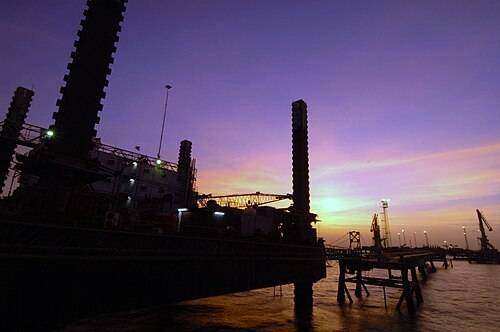
- Oil (fifth-largest reserves)
- Languages
- Arabic, Aramaic, Sorani
Arabic (Mesopotamian dialect), Kurdish (Sorani, Kurmanji); Turkmen, Syriac - Currency
- Iraqi dinar (ع.د)
- People are called
- Iraqi
- Main cities
- Baghdad, Basra, Mosul, Erbil, Najaf
Timeline of Iraq
- 3200 BCWriting in Sumer
- 762Baghdad founded
- 1258Mongols sack Baghdad
- 1932Independence
- 1979Saddam Hussein president
- 2003US invasion
- 2017ISIS defeated
Places to see in Iraq
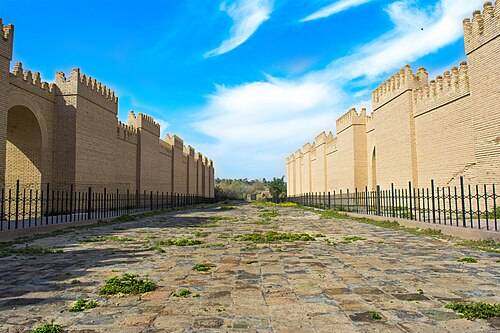
- Babylon
- Ziggurat of Ur
- Erbil Citadel
- Imam Ali Shrine, Najaf
- Mesopotamian Marshes
- Samarra's spiral minaret
Food and drink
Masgouf (grilled carp) · dolma · kubba · dates
Culture and famous for
Cradle of civilisation: writing, the wheel, first cities; Epic of Gilgamesh
Popular sports
Football
Geography and climate
- Highest point
- Cheekha Dar, 3,611 m
- Rivers, lakes and seas
- Tigris, Euphrates
- Climate
- Hot desert; cooler Kurdish mountains
- Coastline
- Has a sea coast
- Population density
- 105 people per km²
Wars and conflicts
- Iran-Iraq War
- Gulf War 1991
- US invasion 2003
- ISIS war 2014–17
Empires and states that once stood here
Sumer c. 4500–1900 BCAkkadian Empire c. 2334–2154 BCAssyrian Empire c. 2025–609 BCBabylonian Empire c. 1894–539 BCParthian and Sasanian Persia 247 BC–651 ADIslamic State "caliphate" 2014–2019
Alliances and memberships
Political unions and regional organisations
Arab LeagueOrganisation of Islamic Cooperation
Economy and trade
Iraq in depth
Detailed facts from the CIA World Factbook (public domain, latest edition).
Overview
- History in brief
- Formerly part of the Ottoman Empire, Iraq was occupied by the United Kingdom during World War I and was declared a League of Nations mandate under UK administration in 1920. Iraq attained its independence as a kingdom in 1932. It was proclaimed a republic in 1958 after a coup overthrew the monarchy, but in actuality, a series of strongmen ruled the country until 2003. The last was SADDAM Hussein, from 1979 to 2003. Territorial disputes with Iran led to an inconclusive and costly war from 1980 to 1988. In 1990, Iraq seized Kuwait but was expelled by US-led UN coalition forces during the two-month-long Gulf War of 1991. After Iraq's expulsion, the UN Security Council (UNSC) required Iraq to scrap all weapons of mass destruction and long-range missiles and to allow UN verification inspections. Continued Iraqi noncompliance with UNSC resolutions led to the Second Gulf War in 2003, when US-led forces ousted the SADDAM regime. In 2005, Iraqis approved a constitution in a national referendum and elected a 275-member Council of Representatives (COR). The COR approved most of the cabinet ministers, marking the transition to Iraq's first constitutional government in nearly a half-century. Iraq's constitution also established the Kurdistan Regional Government (KRG), a semi-autonomous region that administers the governorates of Erbil, Dahuk, and As Sulaymaniyah. Iraq has held four national legislative elections since 2006, most recently in 2021. The COR approved Mohammad Shia' al-SUDANI as prime minister in 2022. Iraq has repeatedly postponed elections for provincial councils -- last held in 2013 -- and since 2019, the prime minister has had the authority to appoint governors rather than provincial councils. Between 2014 and 2017, Iraq fought a military campaign against the Islamic State of Iraq and ash-Sham (ISIS) to recapture territory the group seized in 2014. In 2017, then-Prime Minister Haydar al-ABADI publicly declared victory against ISIS, although military operations against the group continue in rural areas. Also in 2017, Baghdad forcefully seized disputed territories across central and northern Iraq from the KRG, after a non-binding Kurdish independence referendum.
Geography
- Location
- Middle East, bordering the Persian Gulf, between Iran and Kuwait
- Size compared
- slightly more than three times the size of New York State
- Land borders
- Total: 3,809 kmBorder countries: Iran 1,599 km; Jordan 179 km; Kuwait 254 km; Saudi Arabia 811 km; Syria 599 km; Turkey 367 km
- Coastline
- 58 km
- Climate
- mostly desert; mild to cool winters with dry, hot, cloudless summers; northern mountainous regions along Iranian and Turkish borders experience cold winters with occasionally heavy snows that melt in early spring, sometimes causing extensive flooding in central and southern Iraq
- Terrain
- mostly broad plains; reedy marshes along Iranian border in south with large flooded areas; mountains along borders with Iran and Turkey
- Elevation
- Highest point: Cheekha Dar (Kurdish for "Black Tent") 3,611 mLowest point: Persian Gulf 0 mMean elevation: 312 m
- Natural resources
- petroleum, natural gas, phosphates, sulfur
- Major rivers
- Euphrates river mouth (shared with Turkey[s], Syria, and Iran) - 3,596 km; Tigris river mouth (shared with Turkey[s], Syria, and Iran) - 1,950 km; the Tigris and Euphrates join to form the Shatt al ArabNote: [s] after country name indicates river source; [m] after country name indicates river mouth
- Major lakes
- Fresh water lake(s): Lake Hammar - 1,940 sq km
- Natural hazards
- dust storms; sandstorms; floods
- Notes
- strategic location on Shatt al Arab waterway and at the head of the Persian Gulf
- Environmental issues
- habitat loss from wetland draining; inadequate potable water; soil degradation (salination) and erosion; desertification; air, soil, and groundwater pollution from military and industries; water pollution from oil refineries and factory and sewage discharges; soil pollution from fertilizer and chemicals; air pollution in urban areas
People and society
- Population
- Total: 42,917,742 (2025 est.)Male: 21,614,894Female: 21,302,848
- Nationality
- Noun: Iraqi(s)Adjective: Iraqi
- Ethnic groups
- Arab 75-80%, Kurdish 15-20%, other 5% (includes Turkmen, Yezidi, Shabak, Kaka'i, Bedouin, Romani, Assyrian, Circassian, Sabaean-Mandaean, Persian)
- Languages
- Arabic (official), Kurdish (official); Turkmen (a Turkish dialect) and Syriac (Neo-Aramaic) are recognized as official languages where native speakers of these languages are presentMajor-language sample(s): كتاب حقائق العالم، أحسن مصدر للمعلومات الأساسية (Arabic)ڕاستییەکانی جیهان، باشترین سەرچاوەیە بۆ زانیارییە بنەڕەتییەکان (Kurdish)The World Factbook, the indispensable source for basic information.
- Religions
- Muslim (official) 95-98% (Shia 61-64%, Sunni 29-34%), Christian 1% (includes Catholic, Orthodox, Protestant, Assyrian Church of the East), other 1-4% (2015 est.)
- Median age
- Total: 22.7 years (2025 est.)Male: 22 yearsFemale: 22.7 years
- Population growth
- 1.94% (2025 est.)
- Life expectancy
- Total population: 73.7 years (2024 est.)Male: 71.9 yearsFemale: 75.7 years
- Children per woman
- 3.03 children born/woman (2025 est.)
- Urbanization
- Urban population: 71.6% of total population (2023)Rate of urbanization: 2.91% annual rate of change (2020-25 est.)
- Largest cities
- 7.711 million BAGHDAD (capital), 1.792 million Mosul, 1.448 million Basra, 1.075 million Kirkuk, 958,000 Najaf, 897,000 Erbil (2023)
- Literacy
- Total population: 84.1% (2021 est.)Male: 90.3% (2021 est.)Female: 77.8% (2021 est.)
Government
- Official names
- Conventional long form: Republic of IraqConventional short form: IraqLocal long form: Jumhuriyat al-Iraq/Komar-i EraqLocal short form: Al Iraq/EraqFormer: Mesopotamia, Mandatory Iraq, Hashemite Kingdom of IraqEtymology: the name probably derives from Uruk ("Erech" in Aramaic), the ancient Sumerian and Babylonian city on the Euphrates River
- Government type
- federal parliamentary republic
- Capital
- Name: BaghdadGeographic coordinates: 33 20 N, 44 24 ETime difference: UTC+3 (8 hours ahead of Washington, DC, during Standard Time)Etymology: the origin of the name is unclear; it may mean "gift of God," from the pre-Islamic words bagh (god) and dad (given)
- Regions
- 19 governorates (muhafazat, singular - muhafazah (Arabic); parezgakan, singular - parezga (Kurdish)); 'Al Anbar; Al Basrah; Al Muthanna; Al Qadisiyah (Ad Diwaniyah); An Najaf; Arbil (Erbil) (Arabic), Halabjah; Hewler (Kurdish); As Sulaymaniyah (Arabic), Slemani (Kurdish); Babil; Baghdad; Dahuk (Arabic), Dihok (Kurdish); Dhi Qar; Diyala; Karbala'; Kirkuk; Maysan; Ninawa; Salah ad Din; Wasit
- Independence
- 3 October 1932 (from League of Nations mandate under British administration)
- National holiday
- Independence Day, 3 October (1932); Republic Day, 14 July (1958)
- Constitution
- History: several previous; latest adopted by referendum 15 October 2005Amendment process: proposed by the president of the republic and the Council of Minsters collectively, or by one fifth of the Council of Representatives members; passage requires at least two-thirds majority vote by the Council of Representatives, approval by referendum, and ratification by the president; passage of amendments to articles on citizen rights and liberties requires two-thirds majority vote of Council of Representatives members after two successive electoral terms, approval in a referendum, and ratification by the president
- Legal system
- mixed system of civil and Islamic law
- Voting age
- 18 years of age; universal
- Flag meaning
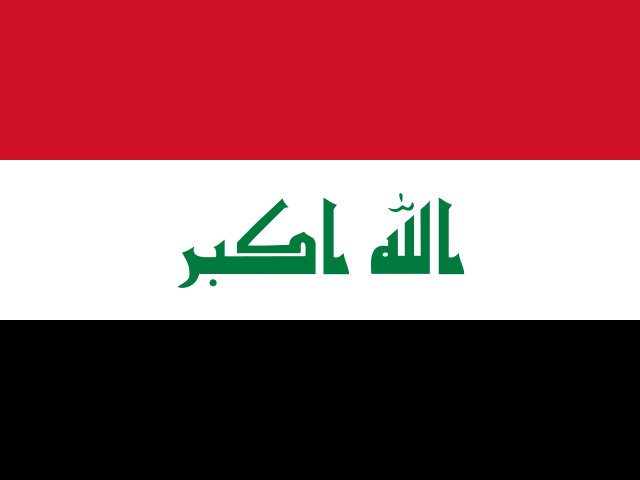
- Description: three equal horizontal bands of red (top), white, and black; the Takbir (Arabic phrase meaning "God is great") in green Arabic script is centered in the white bandMeaning: the colors come from the Arab Liberation flag and stand for oppression (black) overcome through bloody struggle (red), to be replaced by a bright future (white)History: the Council of Representatives approved this flag in 2008 as a compromise replacement for the Ba'thist SADDAM-era flag
- National symbols
- golden eagle
- National colours
- red, white, black
- National anthem
- Title: "Mawtini" (My Homeland)Lyrics/music: Ibrahim TOUQAN/Mohammad FLAYFELHistory: adopted 2004, after the ouster of SADDAM Husayn; popular Arab folk song that also serves as an unofficial anthem for the Palestinian people
- UNESCO World Heritage Sites
- Total World Heritage Sites: 6 (5 cultural, 1 mixed)Selected World Heritage Site locales: Ashur (Qal'at Sherqat) (c); Babylon (c); Erbil Citadel (c); Hatra (c); Samarra Archaeological City (c); The Ahwar (Marshland) of Southern Iraq: Refuge of Biodiversity and the Relict Landscape of the Mesopotamian Cities (m)
Economy
- Overview
- highly oil-dependent Middle Eastern economy; fiscal sustainability subject to fluctuation in oil prices; rising public confidence in economic conditions; import-dependent for most sectors; persistent challenges of corruption, informal markets, banking access, and political fragility
- GDP (PPP)
- $585.887 billion (2024 est.)
- GDP per person (PPP)
- $12,700 (2024 est.)
- GDP growth
- -1.5% (2024 est.)
- Inflation
- 4.4% (2023 est.)
- Unemployment
- 15.6% (2024 est.)
- Farm products
- wheat, dates, maize, tomatoes, rye, grapes, milk, chicken, potatoes, fruits (2023)
- Industries
- petroleum, chemicals, textiles, leather, construction materials, food processing, fertilizer, metal fabrication/processing
- Exports
- $107.852 billion (2023 est.)
- Main exports
- crude petroleum, refined petroleum, petroleum coke, gold, natural gas (2023)
- Export partners
- China 33%, India 28%, USA 8%, Greece 5%, UAE 5% (2023)
- Main imports
- refined petroleum, cars, broadcasting equipment, jewelry, gold (2023)
- Import partners
- UAE 32%, China 20%, Turkey 18%, India 5%, USA 2% (2023)
- Money sent home from abroad
- 0.4% of GDP (2023 est.)
Energy, internet and transport
- Electricity access
- Electrification - total population: 100% (2022 est.)
- Electricity sources
- Fossil fuels: 98.8% of total installed capacity (2023 est.)Solar: 0.3% of total installed capacity (2023 est.)Hydroelectricity: 0.9% of total installed capacity (2023 est.)
- Internet users
- Percent of population: 82% (2023 est.)
- Mobile phones
- Total subscriptions: 46.1 million (2024 est.)Subscriptions per 100 inhabitants: 100 (2024 est.)
- TV and radio
- the number of private radio and TV stations has increased rapidly since 2003; state-owned TV and radio stations are operated by the publicly funded Iraqi Media Network; private broadcast media are mostly linked to political, ethnic, or religious groups; satellite TV is available to about 70% of viewers; many broadcasters are based abroad; transmissions of multiple international radio broadcasters are accessible (2019)
- Airports
- 73 (2025)
- Railways
- Total: 2,272 km (2014)Standard gauge: 2,272 km (2014) 1.435-m gauge
- Merchant ships
- Total: 74 (2023)By type: general cargo 1, oil tanker 6, other 67
Military and space
- Armed forces
- Ministry of Defense: Iraqi Army, Iraqi Navy, Iraqi Air ForceOffice of the Prime Minister: Iraqi Counterterrorism Service (CTS); Popular Mobilization Committee (PMC)Ministry of Interior: Federal Police Forces Command, Border Guard Forces Command, Federal Intelligence and Investigations Agency, Emergency Response Division, Facilities Protection Directorate, and Provincial Police; Ministry of Oil: Energy Police Directorate (2025)
- Military spending
- 2.5% of GDP (2024 est.)
- Military service
- 18 years of age for voluntary military service; no conscription (2025)
Global issues
- Refugees and displaced people
- Refugees: 335,343 (2024 est.)IDPs: 1,201,813 (2024 est.)Stateless persons: 233 (2024 est.)
Neighbouring countries
IranJordanKuwaitSaudi ArabiaSyriaTürkiye
- Phone code
- +964
- Internet domain
- .iq