Kyrgyzstan
Kyrgyz Republic · Кыргызстан · Киргизия
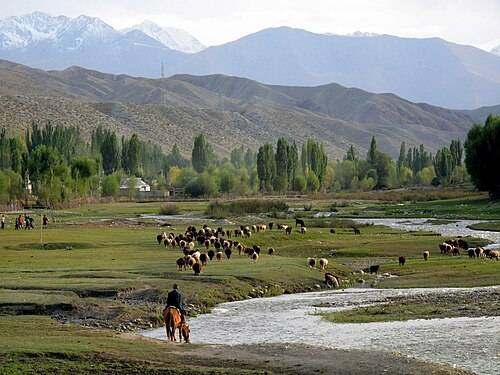
Home of the epic of Manas and nomadic herders. Russian then Soviet. Three revolutions since independence; signed a border treaty with Tajikistan in 2025.
See Kyrgyzstan on the 3D globeTake a quiz
Population7.2 million
Area199,951 km²
CapitalBishkek
RegionCentral Asia
Did you know?
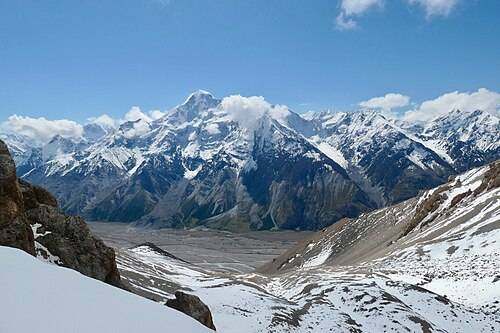
- About 90% of the country is mountains
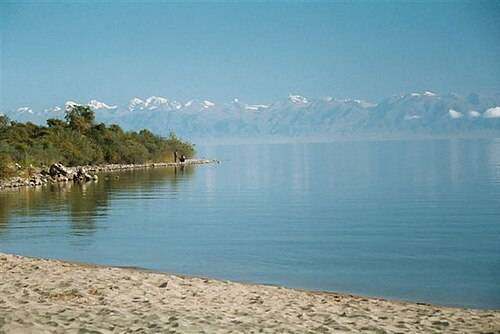
- Issyk-Kul never freezes despite cold winters
- Hosts the World Nomad Games
Key facts about Kyrgyzstan
- Government
- Presidential republic
- Religion
- Islam ~90%, Orthodox ~7%
- Founded / independence
- 1991 (from USSR)
- Rich in
- Gold (Kumtor), hydropower, remittances
- Languages
- Kyrgyz, Russian
Kyrgyz and Russian; Uzbek in the south - Currency
- Kyrgyzstani som (с)
- People are called
- Kirghiz
- Main cities
- Bishkek, Osh, Jalal-Abad
Timeline of Kyrgyzstan
- 1876Russian conquest
- 1936Soviet republic
- 1991Independence
- 2005Tulip Revolution
- 2010Revolution
- 2020Revolution
Places to see in Kyrgyzstan
- Issyk-Kul lake
- Son-Kul
- Ala Archa gorge
- Burana Tower
- Tash Rabat caravanserai
Food and drink
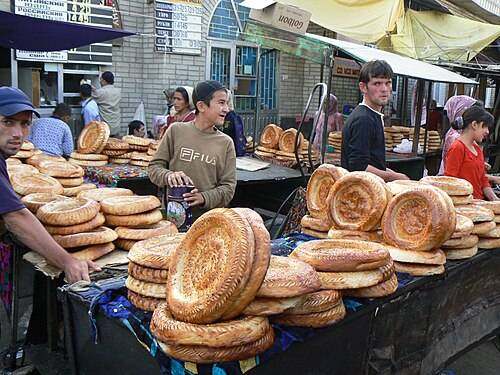
Beshbarmak · plov · kumis · boorsok
Culture and famous for
The Epic of Manas (one of the longest epic poems); felt shyrdak rugs; World Nomad Games
Popular sports
Kok-boru (horseback game), wrestling
Geography and climate
- Highest point
- Jengish Chokusu (Victory Peak), 7,439 m
- Rivers, lakes and seas
- Naryn; Issyk-Kul (second-largest alpine lake)
- Climate
- Continental mountain
- Coastline
- Landlocked
- Population density
- 36 people per km²
Wars and conflicts
- Revolutions 2005, 2010, 2020
- border clashes with Tajikistan
Alliances and memberships
Military and security
CSTOShanghai Cooperation Organisation
Political unions and regional organisations
Eurasian Economic UnionCommonwealth of Independent StatesOrganization of Turkic StatesOrganisation of Islamic Cooperation
Kyrgyzstan in depth
Detailed facts from the CIA World Factbook (public domain, latest edition).
Overview
- History in brief
- Kyrgyzstan is a Central Asian country of incredible natural beauty and proud nomadic traditions. The Russian Empire annexed most of the territory of present-day Kyrgyzstan in 1876. The Kyrgyz staged a major revolt against the Tsarist Empire in 1916, during which almost one-sixth of the Kyrgyz population was killed. Kyrgyzstan became a Soviet republic in 1926 and achieved independence in 1991 when the USSR dissolved. Nationwide demonstrations in 2005 and 2010 resulted in the ouster of the country’s first two presidents, Askar AKAEV and Kurmanbek BAKIEV. Almazbek ATAMBAEV was sworn in as president in 2011. In 2017, ATAMBAEV became the first Kyrgyzstani president to serve a full term and respect constitutional term limits, voluntarily stepping down at the end of his mandate. Former prime minister and ruling Social-Democratic Party of Kyrgyzstan member Sooronbay JEENBEKOV replaced him after winning the 2017 presidential election, which was the most competitive in the country’s history despite reported cases of vote buying and abuse of public resources.In 2020, protests against parliamentary election results spread across Kyrgyzstan, leading to JEENBEKOV’s resignation and catapulting previously imprisoned Sadyr JAPAROV to acting president. In 2021, Kyrgyzstanis formally elected JAPAROV as president and approved a referendum to move Kyrgyzstan from a parliamentary to a presidential system. In 2021, Kyrgyzstanis voted in favor of constitutional changes that consolidated power in the presidency. Pro-government parties won a majority in the 2021 legislative elections. Continuing concerns for Kyrgyzstan include the trajectory of democratization, endemic corruption, tense regional relations, vulnerabilities due to climate change, border security vulnerabilities, and potential terrorist threats.
Geography
- Location
- Central Asia, west of China, south of Kazakhstan
- Size compared
- slightly smaller than South Dakota
- Land borders
- Total: 4,573 kmBorder countries: China 1,063 km; Kazakhstan 1,212 km; Tajikistan 984 km; Uzbekistan 1,314 km
- Coastline
- 0 km (landlocked)
- Climate
- dry continental to polar in high Tien Shan Mountains; subtropical in southwest (Fergana Valley); temperate in northern foothill zone
- Terrain
- peaks of the Tien Shan mountain range and associated valleys and basins encompass the entire country
- Elevation
- Highest point: Jengish Chokusu (Pik Pobedy) 7,439 mLowest point: Kara-Daryya (Karadar'ya) 132 mMean elevation: 2,988 m
- Natural resources
- abundant hydropower; gold, rare earth metals; locally exploitable coal, oil, and natural gas; other deposits of nepheline, mercury, bismuth, lead, and zinc
- Major rivers
- Syr Darya river source (shared with Tajikistan, Uzbekistan, and Kazakhstan [m]) - 3,078 kmNote: [s] after country name indicates river source; [m] after country name indicates river mouth
- Major lakes
- Salt water lake(s): Ozero Issyk-Kul 6,240 sq kmnote - second largest saline lake after the Caspian Sea; second highest mountain lake after Lake Titicaca; it is an endorheic mountain basin; although surrounded by snow capped mountains it never freezes
- Natural hazards
- major flooding during snow melt; prone to earthquakes
- Notes
- landlocked; entirely mountainous, dominated by the Tien Shan range; 94% of the country is 1,000 m above sea level with an average elevation of 2,750 m; many tall peaks, glaciers, and high-altitude lakes
- Environmental issues
- water pollution; increasing soil salinity from irrigation practices; air pollution due to vehicle traffic
People and society
- Population
- Total: 6,219,751 (2025 est.)Male: 3,043,940Female: 3,175,811
- Nationality
- Noun: Kyrgyzstani(s)Adjective: Kyrgyzstani
- Ethnic groups
- Kyrgyz 73.8%, Uzbek 14.8%, Russian 5.1%, Dungan 1.1%, other 5.2% (includes Uyghur, Tajik, Turk, Kazakh, Tatar, Ukrainian, Korean, German) (2021 est.)
- Languages
- Kyrgyz (state language) 71.4%, Uzbek 14.4%, Russian (official language) 9%, other 5.2% (2009 est.)Major-language sample(s): Дүйнөлүк фактылар китеби, негизги маалыматтын маанилүү булагы. (Kyrgyz)The World Factbook, the indispensable source for basic information.
- Religions
- Muslim 90% (majority Sunni), Christian 7% (Russian Orthodox 3%), other 3% (includes Jewish, Buddhist, Baha'i) (2017 est.)
- Median age
- Total: 28.6 years (2025 est.)Male: 26.9 yearsFemale: 29.8 years
- Population growth
- 0.75% (2025 est.)
- Life expectancy
- Total population: 72.9 years (2024 est.)Male: 68.9 yearsFemale: 77.2 years
- Children per woman
- 2.43 children born/woman (2025 est.)
- Urbanization
- Urban population: 37.8% of total population (2023)Rate of urbanization: 2.05% annual rate of change (2020-25 est.)
- Largest cities
- 1.105 million BISHKEK (capital) (2023)
- Years in school
- Total: 13 years (2024 est.)Male: 12 years (2024 est.)Female: 13 years (2024 est.)
Government
- Official names
- Conventional long form: Kyrgyz RepublicConventional short form: KyrgyzstanLocal long form: Kyrgyz RespublikasyLocal short form: KyrgyzstanEtymology: named for the local Kyrgyz people, with "-stan" coming from the Persian word ostan, meaning "country;" the Kyrgyz name may derive from the Turkic root words kir, or "steppe," and gismek, "to wander;" the name is traditionally said to come from a combination of the Turkic words kyrg (forty) and -is (hundred), based on a tale about two tribes and the number of their tents
- Government type
- parliamentary republic
- Capital
- Name: BishkekGeographic coordinates: 42 52 N, 74 36 ETime difference: UTC+6 (11 hours ahead of Washington, DC, during Standard Time)Etymology: the meaning of the name is unknown; the city was founded in 1862 as a Russian settlement on the site of an Uzbek fortress named Bishkek; the Russian version of the name was Pishpek, and the original name only came back into use in 1991
- Regions
- 7 provinces (oblustar, singular - oblus) and 2 cities* (shaarlar, singular - shaar); Batken Oblusu, Bishkek Shaary*, Chuy Oblusu (Bishkek), Jalal-Abad Oblusu, Naryn Oblusu, Osh Oblusu, Osh Shaary*, Talas Oblusu, Ysyk-Kol Oblusu (Karakol)
- Independence
- 31 August 1991 (from the Soviet Union)
- National holiday
- Independence Day, 31 August (1991)
- Constitution
- History: previous 1993, 2007, 2010; latest approved by referendum in 2021Amendment process: proposed as a draft law by the majority of the Supreme Council membership or by petition of 300,000 voters; passage requires at least two-thirds majority vote of the Council membership in each of at least three readings of the draft two months apart; the draft may be submitted to a referendum if approved by two thirds of the Council membership; adoption requires the signature of the president
- Legal system
- civil law system that includes features of French civil law and Russian Federation laws
- Voting age
- 18 years of age; universal
- Flag meaning
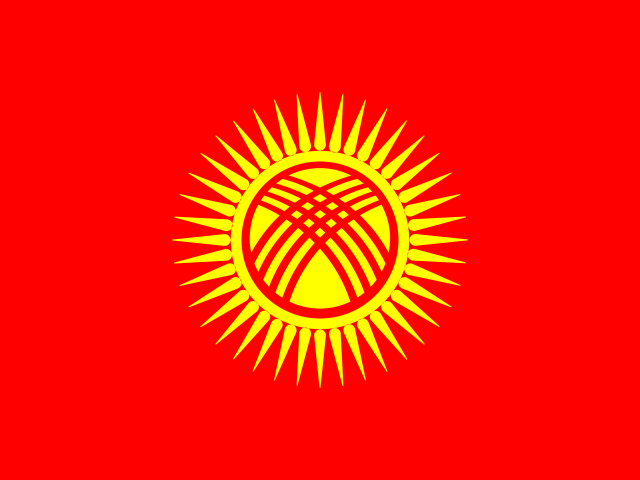
- Description: red field with a yellow sun in the center that has 40 rays that run counterclockwise on the front of the flag and clockwise on the reverse; in the center of the sun is a red ring crossed by two sets of three lines in a stylized representation of a tunduk, the circular opening at the top of a traditional Kyrgyz yurtMeaning: the sun's rays represent the Kyrgyz tribes; red stands for bravery and valor, and the sun for peace and wealth
- National symbols
- white falcon
- National colours
- red, yellow
- National anthem
- Title: "Kyrgyz Respublikasynyn Mamlekettik Gimni" (National Anthem of the Kyrgyz Republic)Lyrics/music: Djamil SADYKOV and Eshmambet KULUEV/Nasyr DAVLESOV and Kalyi MOLDOBASANOVHistory: adopted 1992
- UNESCO World Heritage Sites
- Total World Heritage Sites: 3 (2 cultural, 1 natural)Selected World Heritage Site locales: Sulaiman-Too Sacred Mountain (c); Silk Roads: the Chang'an-Tianshan Corridor (c); Western Tien Shan (n)
Economy
- Overview
- landlocked, lower-middle-income Central Asian economy; natural resource rich; growing hydroelectricity and tourism; high remittances; corruption limits investment; COVID-19 and political turmoil hurt GDP, limited public revenues, and increased spending
- GDP (PPP)
- $50.907 billion (2024 est.)
- GDP per person (PPP)
- $7,000 (2024 est.)
- GDP growth
- 9% (2024 est.)
- Inflation
- 10.8% (2023 est.)
- Unemployment
- 3.3% (2024 est.)
- Below poverty line
- 33.3% (2021 est.)
- Farm products
- milk, potatoes, maize, sugar beets, wheat, barley, tomatoes, onions, watermelons, carrots/turnips (2023)
- Industries
- small machinery, textiles, food processing, cement, shoes, lumber, refrigerators, furniture, electric motors, gold, rare earth metals
- Exports
- $3.628 billion (2022 est.)
- Main exports
- gold, coal, precious metal ore, refined petroleum, garments (2023)
- Export partners
- Switzerland 30%, Russia 19%, Kazakhstan 14%, UAE 10%, Turkey 8% (2023)
- Main imports
- cars, garments, refined petroleum, fabric, footwear (2023)
- Import partners
- China 44%, Russia 12%, Kazakhstan 6%, Turkey 6%, Uzbekistan 4% (2023)
- Money sent home from abroad
- 18.8% of GDP (2023 est.)
Energy, internet and transport
- Electricity access
- Electrification - total population: 99.7% (2022 est.)Electrification - urban areas: 100%Electrification - rural areas: 99.6%
- Electricity sources
- Fossil fuels: 14.3% of total installed capacity (2023 est.)Hydroelectricity: 85.7% of total installed capacity (2023 est.)
- Internet users
- Percent of population: 89% (2023 est.)
- Mobile phones
- Total subscriptions: 7.72 million (2024 est.)Subscriptions per 100 inhabitants: 107 (2024 est.)
- TV and radio
- state-funded public TV broadcaster NTRK operates Ala-Too 24 news channel and 4 other educational, cultural, and sports channels; ELTR is a state-owned TV station; the switchover to digital TV in 2017 resulted in private TV station growth; approximately 20 TV stations are struggling to increase Kyrgyz-language content to 60% of airtime, as required by law, instead of rebroadcasting programs from Russian channels or airing unlicensed movies and music; several Russian TV stations also broadcast; state-funded radio stations and about 10 significant private radio stations (2023)
- Airports
- 28 (2025)
- Railways
- Total: 424 km (2022)Broad gauge: 424 km (2018) 1.520-m gauge
Military and space
- Armed forces
- Armed Forces of the Kyrgyz Republic: Land Forces (Kygyz Army), Air Defense Forces (Kyrgyz Air Force), National Guard of the Armed Forces of the Kyrgyz RepublicMinistry of Internal Affairs: Internal Security ServiceState Committee for National Security: Border Guard Service (2025)
- Military spending
- 3% of GDP (2024 est.)
- Military service
- 18-27 years of age for compulsory or voluntary service for men in the Armed Forces or Interior Ministry; 12-month service obligation (9 months for university graduates), with optional fee-based 3-year service in the call-up mobilization reserve; women may volunteer at age 19; 16-17 years of age for military cadets, who cannot take part in military operations (2025)
Global issues
- Refugees and displaced people
- Refugees: 25,413 (2024 est.)IDPs: 12 (2024 est.)Stateless persons: 925 (2024 est.)
Neighbouring countries
ChinaKazakhstanTajikistanUzbekistan
- Phone code
- +996
- Internet domain
- .kg