Tajikistan
Republic of Tajikistan · Таджикистан · Тоҷикистон
Heir of the Samanid Persian empire. Part of the USSR until 1991; a civil war followed. The same president has ruled since 1992.
See Tajikistan on the 3D globeTake a quiz
Population10.6 million
Area143,100 km²
CapitalDushanbe
RegionCentral Asia
Did you know?
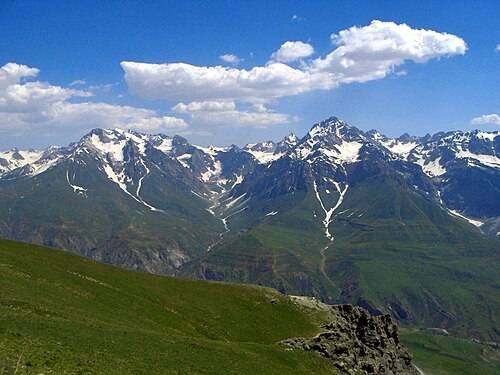
- About 93% of the land is mountains
- Has one of the world's tallest flagpoles (165 m)
- The Rogun Dam will be among the world's tallest
Key facts about Tajikistan
- Government
- Presidential republic (authoritarian)
- Religion
- Sunni Islam ~97%
- Founded / independence
- 1991 (from USSR)
- Rich in
- Aluminium, hydropower (Rogun dam), cotton, remittances
- Languages
- Russian, Tajik
Tajik (Persian family); Uzbek, Russian, Pamiri languages - Currency
- Tajikistani somoni (ЅМ)
- People are called
- Tadzhik
- Main cities
- Dushanbe, Khujand, Bokhtar, Kulob
Timeline of Tajikistan
- 819Samanid Empire
- 1868Russian rule
- 1929Soviet republic
- 1991Independence
- 1992Civil war
- 1997Peace
Places to see in Tajikistan
- Pamir Highway
- Iskanderkul lake
- Fann Mountains
- Hisor Fortress
- Dushanbe
Food and drink
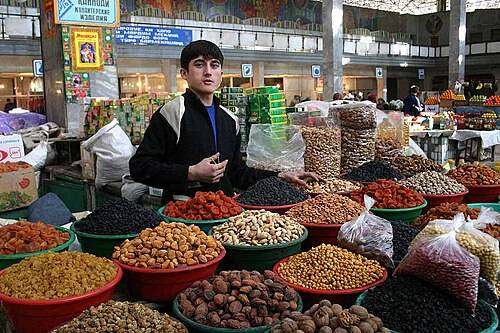
Qurutob (bread with yoghurt) · plov · sambusa
Culture and famous for
Persian poetry; Pamiri houses
Popular sports
Wrestling, football, buzkashi
Geography and climate
- Highest point
- Ismoil Somoni Peak, 7,495 m
- Rivers, lakes and seas
- Amu Darya, Vakhsh
- Climate
- Continental mountain
- Coastline
- Landlocked
- Population density
- 74 people per km²
Wars and conflicts
- Civil War 1992–97
Alliances and memberships
Military and security
CSTOShanghai Cooperation Organisation
Political unions and regional organisations
Commonwealth of Independent StatesOrganisation of Islamic Cooperation
Tajikistan in depth
Detailed facts from the CIA World Factbook (public domain, latest edition).
Overview
- History in brief
- The Tajik people came under Russian imperial rule in the 1860s and 1870s, but Russia's hold on Central Asia weakened following the Revolution of 1917. At that time, bands of indigenous guerrillas (known as "basmachi") fiercely contested Bolshevik control of the area, which was not fully reestablished until 1925. Tajikistan was first established as an autonomous Soviet Socialist Republic within the Uzbek Soviet Socialist Republic in 1924, but in 1929 the Soviet Union made Tajikistan as a separate republic and transferred to it much of present-day Sughd Province. Ethnic Uzbeks form a substantial minority in Tajikistan, and ethnic Tajiks an even larger minority in Uzbekistan. Tajikistan became independent in 1991 after the breakup of the Soviet Union, and the country experienced a civil war among political, regional, and religious factions from 1992 to 1997. Despite Tajikistan's general elections for both the presidency (once every seven years) and legislature (once every five years), observers note an electoral system rife with irregularities and abuse, and results that are neither free nor fair. President Emomali RAHMON, who came to power in 1992 during the civil war and was first elected president in 1994, used an attack planned by a disaffected deputy defense minister in 2015 to ban the last major opposition party in Tajikistan. RAHMON further strengthened his position by having himself declared "Founder of Peace and National Unity, Leader of the Nation," with limitless terms and lifelong immunity through constitutional amendments ratified in a referendum. The referendum also lowered the minimum age required to run for president from 35 to 30, which made RAHMON's first-born son Rustam EMOMALI, the mayor of the capital city of Dushanbe, eligible to run for president in 2020. RAHMON orchestrated EMOMALI's selection in 2020 as chairman of the Majlisi Milli (the upper chamber of Tajikistan's parliament), positioning EMOMALI as next in line of succession for the presidency. RAHMON opted to run in the presidential election later that year and received 91% of the vote.The country remains the poorest of the former Soviet republics. Tajikistan became a member of the WTO in 2013, but its economy continues to face major challenges, including dependence on remittances from Tajikistani migrant laborers in Russia and Kazakhstan, pervasive corruption, the opiate trade, and destabilizing violence emanating from neighboring Afghanistan. Tajikistan has endured several dom
Geography
- Location
- Central Asia, west of China, south of Kyrgyzstan
- Size compared
- slightly smaller than Wisconsin
- Land borders
- Total: 4,130 kmBorder countries: Afghanistan 1,357 km; China 477 km; Kyrgyzstan 984 km; Uzbekistan 1,312 km
- Coastline
- 0 km (landlocked)
- Climate
- mid-latitude continental, hot summers, mild winters; semiarid to polar in Pamir Mountains
- Terrain
- mountainous region dominated by the Alay Mountains in the north and the Pamirs in the southeast; western Fergana Valley in north, Kofirnihon and Vakhsh Valleys in southwest
- Elevation
- Highest point: Qullai Somoniyon 7,495 mLowest point: Syr Darya (Sirdaryo) 300 mMean elevation: 3,186 m
- Natural resources
- hydropower, some petroleum, uranium, mercury, brown coal, lead, zinc, antimony, tungsten, silver, gold
- Major rivers
- Syr Darya (shared with Kyrgyzstan [s], Uzbekistan, and Kazakhstan [m]) - 3,078 km; Amu Darya river source (shared with Turkmenistan, Afghanistan, and Uzbekistan [m]) - 2,620 kmNote: [s] after country name indicates river source; [m] after country name indicates river mouth
- Natural hazards
- earthquakes; floods
- Notes
- landlocked; highest point, Qullai Ismoili Somoni (formerly Communism Peak), was the tallest mountain in the former USSR
- Environmental issues
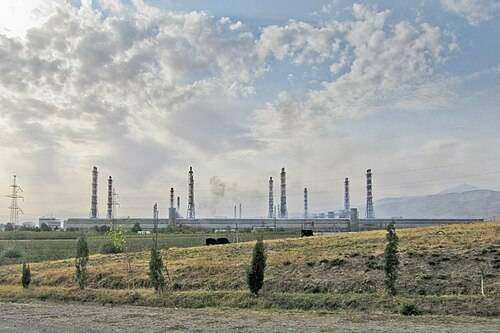
- air pollution from motor vehicles and industry; water pollution from agricultural runoff and untreated industrial waste and sewage; poor management of water resources; soil erosion; increasing levels of soil salinity
People and society
- Population
- Total: 10,593,876 (2025 est.)Male: 5,322,920Female: 5,270,956
- Nationality
- Noun: Tajikistani(s)Adjective: Tajikistani
- Ethnic groups
- Tajik 84.3% (includes Pamiri and Yagnobi), Uzbek 13.8%, other 2% (includes Kyrgyz, Russian, Turkmen, Tatar, Arab) (2014 est.)
- Languages
- Tajik (official) 84.4%, Uzbek 11.9%, Kyrgyz 0.8%, Russian 0.5%, other 2.4% (2010 est.)Major-language sample(s): Китоби Фактҳои Ҷаҳонӣ, манбаи бебадали маълумоти асосӣ (Tajik)The World Factbook, the indispensable source for basic information.
- Religions
- Muslim 98% (Sunni 95%, Shia 3%) other 2% (2014 est.)
- Median age
- Total: 22.8 years (2025 est.)Male: 22.3 yearsFemale: 23.2 years
- Population growth
- 1.89% (2025 est.)
- Life expectancy
- Total population: 71.9 years (2024 est.)Male: 70.1 yearsFemale: 73.8 years
- Children per woman
- 3.52 children born/woman (2025 est.)
- Urbanization
- Urban population: 28.2% of total population (2023)Rate of urbanization: 2.73% annual rate of change (2020-25 est.)
- Largest cities
- 987,000 DUSHANBE (capital) (2023)
- Literacy
- Female: 94.6% (2017 est.)
- Years in school
- Total: 12 years (2024 est.)Male: 12 years (2024 est.)Female: 11 years (2024 est.)
Government
- Official names
- Conventional long form: Republic of TajikistanConventional short form: TajikistanLocal long form: Jumhurii TojikistonLocal short form: TojikistonFormer: Tajik Soviet Socialist RepublicEtymology: the Persian suffix -ostan means "land," so the country name means "Land of the Tajik [people];" the name Tajik comes from the Sanskrit tajika, a name originally used to distinguish Arabs from Turks and derived from the Tay, an Arab people
- Government type
- presidential republic
- Capital
- Name: DushanbeGeographic coordinates: 38 33 N, 68 46 ETime difference: UTC+5 (10 hours ahead of Washington, DC, during Standard Time)Etymology: the name means Monday in Persian; today's city was originally at the crossroads where a large bazaar was held on Mondays, or the second day (du) after Saturday (shambe)
- Regions
- 2 provinces (viloyatho, singular - viloyat), 1 autonomous province* (viloyati mukhtor), 1 capital region** (viloyati poytakht), and 1 area referred to as Districts Under Republic Administration***; Dushanbe**, Khatlon (Bokhtar), Kuhistoni Badakhshon [Gorno-Badakhshan]* (Khorugh), Nohiyahoi Tobei Jumhuri***, Sughd (Khujand)
- Independence
- 9 September 1991 (from the Soviet Union)
- National holiday
- Independence Day (or National Day), 9 September (1991)
- Constitution
- History: several previous; latest adopted 6 November 1994Amendment process: proposed by the president of the republic or by at least one third of the total membership of both houses of the Supreme Assembly; adoption of any amendment requires a referendum, which includes approval of the president or approval by at least two-thirds majority of the Assembly of Representatives; passage in a referendum requires participation of an absolute majority of eligible voters and an absolute majority of votes; constitutional articles, including Tajikistan’s form of government, its territory, and its democratic nature, cannot be amended
- Legal system
- civil law system
- Voting age
- 18 years of age; universal
- Flag meaning
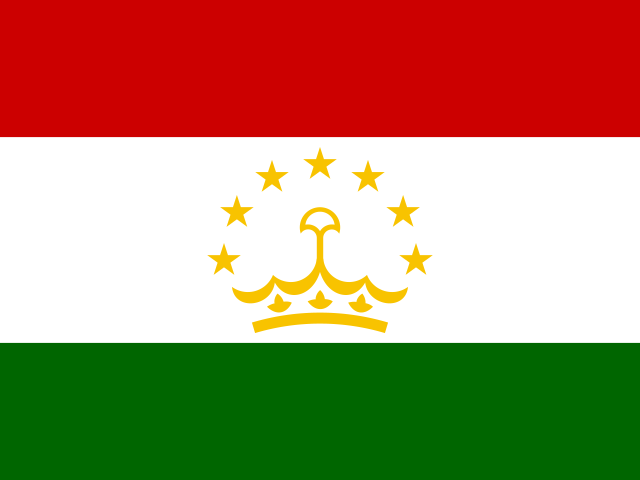
- Description: three horizontal stripes of red (top), a wider stripe of white, and green; a gold crown under seven five-pointed gold stars is in the center of the white stripeMeaning: red stands for the sun, victory, and the unity of the nation; white for purity, cotton, and mountain snows; green for Islam and nature's bounty; the crown symbolizes the Tajik people; the stars represent the number seven, which is considered a symbol of perfection and the embodiment of happiness
- National symbols
- arc of seven five-pointed stars over a crown, Marco Polo sheep
- National colours
- red, white, green
- National anthem
- Title: "Surudi milli" (National Anthem)Lyrics/music: Gulnazar KELDI/Sulaimon YUDAKOVHistory: adopted 1994; after the fall of the Soviet Union, Tajikistan kept the music of its Soviet-era anthem, but adopted new lyrics
- UNESCO World Heritage Sites
- Total World Heritage Sites: 5 (3 cultural, 2 natural)Selected World Heritage Site locales: Proto-urban Site of Sarazm (c); Tajik National Park (Mountains of the Pamirs) (n); Silk Roads: Zarafshan-Karakum Corridor (c); Tugay forests of the Tigrovaya Balka Nature Reserve (n); Cultural Heritage Sites of Ancient Khuttal (c)
Economy
- Overview
- lower-middle-income Central Asian economy; large infrastructure projects, including Rogun Dam, and a push towards green development and digitalization driving growth; strong metal mining, electricity, and manufacturing industries; challenges include land scarcity, climate vulnerability, and complex bureaucratic processes for investors
- GDP (PPP)
- $50.37 billion (2024 est.)
- GDP per person (PPP)
- $4,800 (2024 est.)
- GDP growth
- 8.4% (2024 est.)
- Inflation
- 7.7% (2019 est.)
- Unemployment
- 11.7% (2024 est.)
- Below poverty line
- 20.4% (2023 est.)
- Farm products
- potatoes, milk, wheat, watermelons, onions, tomatoes, carrots/turnips, cotton, vegetables, grapes (2023)
- Industries
- aluminum, cement, coal, gold, silver, antimony, textile, vegetable oil
- Exports
- $1.618 billion (2024 est.)
- Main exports
- gold, precious metal ore, aluminum, lead ore, antimony (2023)
- Export partners
- Switzerland 31%, Kazakhstan 18%, China 17%, Uzbekistan 10%, Turkey 8% (2023)
- Main imports
- garments, footwear, cars, wheat, vehicle parts/accessories (2023)
- Import partners
- China 57%, Kazakhstan 13%, Uzbekistan 8%, Turkey 6%, UAE 4% (2023)
- Money sent home from abroad
- 47.9% of GDP (2024 est.)
Energy, internet and transport
- Electricity access
- Electrification - total population: 100% (2022 est.)Electrification - urban areas: 99%Electrification - rural areas: 100%
- Electricity sources
- Fossil fuels: 7.4% of total installed capacity (2023 est.)Hydroelectricity: 92.6% of total installed capacity (2023 est.)
- Internet users
- Percent of population: 57% (2023 est.)
- Mobile phones
- Total subscriptions: 7.92 million (2023 est.)Subscriptions per 100 inhabitants: 119 (2023 est.)
- TV and radio
- state-run broadcaster has 9 national TV and 10 radio stations, and 4 regional stations; 31 independent TV and 20 independent radio stations broadcast locally and regionally; Russian and other foreign stations available via cable and satellite (2016)
- Airports
- 19 (2025)
- Railways
- Total: 680 km (2014)Broad gauge: 680 km (2014) 1.520-m gauge
Military and space
- Armed forces
- Armed Forces of the Republic of Tajikistan: Ground Forces, Mobile Forces, Air and Air Defense ForcesTajik National Guard (TNG); Ministry of Internal Affairs: Internal Troops of Tajikistan; State Committee on National Security: Border Troops (aka Tajik Border Service) (2025)
- Military spending
- 1.8% of GDP (2024 est.)
- Military service
- 18-27 years of age for compulsory (men only) or voluntary (men and women) military service; up to a 24-month service obligation for conscripts based on education level (2025)
Global issues
- Refugees and displaced people
- Refugees: 15,191 (2024 est.)IDPs: 238 (2024 est.)Stateless persons: 4,466 (2024 est.)
Neighbouring countries
AfghanistanChinaKyrgyzstanUzbekistan
- Phone code
- +992
- Internet domain
- .tj