North Macedonia
Republic of North Macedonia · Македонија
Core of ancient Paeonia and later Roman, Byzantine, Bulgarian, Serbian and Ottoman rule. Left Yugoslavia peacefully in 1991; renamed North Macedonia in 2019 to end a dispute with Greece and joined NATO in 2020.
See North Macedonia on the 3D globeTake a quiz
Population1.8 million
Area25,713 km²
CapitalSkopje
RegionSoutheast Europe
Did you know?
- Lake Ohrid is one of Europe's oldest lakes, over a million years old
- Ohrid once had 365 churches
- Changed its name in 2019 after a dispute with Greece
Key facts about North Macedonia
- Government
- Parliamentary republic
- Religion
- Orthodox ~60%, Islam ~33%
- Founded / independence
- 1991 (from Yugoslavia)
- Rich in
- Agriculture, mining, textiles
- Languages
- Macedonian
Macedonian (South Slavic); Albanian (co-official) - Currency
- denar (den)
- People are called
- Macedonian
- Main cities
- Skopje, Bitola, Kumanovo, Tetovo, Ohrid
Timeline of North Macedonia
- 1371Ottoman conquest
- 1913Divided after Balkan Wars
- 1945Republic within Yugoslavia
- 1991Independence
- 2019Renamed North Macedonia
- 2020Joins NATO
Places to see in North Macedonia
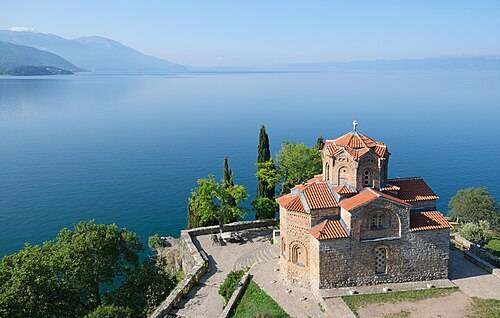
- Lake Ohrid
- Ohrid's St John at Kaneo
- Skopje Stone Bridge
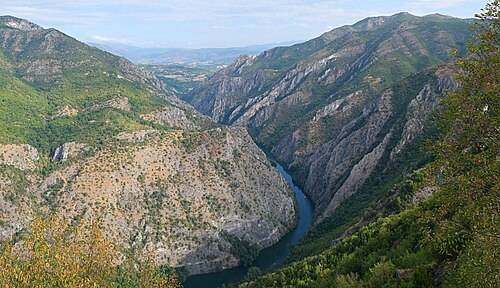
- Matka Canyon
- Heraclea Lyncestis
Food and drink
Tavče gravče (baked beans) · ajvar · burek
Culture and famous for
Birthplace of Mother Teresa (Skopje); Byzantine frescoes
Popular sports
Handball, football
Geography and climate
- Highest point
- Mount Korab, 2,764 m
- Rivers, lakes and seas
- Vardar; Lake Ohrid, Lake Prespa
- Climate
- Continental and Mediterranean
- Coastline
- Landlocked
- Population density
- 70 people per km²
Wars and conflicts
- 2001 Albanian insurgency
Empires and states that once stood here
Serbian Empire 1346–1371Kingdom/SFR of Yugoslavia 1918–1992
Alliances and memberships
Military and security
Political unions and regional organisations
EU candidate countriesCouncil of Europe
North Macedonia in depth
Detailed facts from the CIA World Factbook (public domain, latest edition).
Overview
- History in brief
- North Macedonia gained its independence peacefully from Yugoslavia in 1991 under the name of "Macedonia." Greece objected to the new country’s name, insisting it implied territorial pretensions to the northern Greek province of Macedonia, and democratic backsliding for several years stalled North Macedonia's movement toward Euro-Atlantic integration. Immediately after Macedonia declared independence, Greece sought to block its efforts to gain UN membership if the name "Macedonia" was used. The country was eventually admitted to the UN in 1993 as "The former Yugoslav Republic of Macedonia," and at the same time it agreed to UN-sponsored negotiations on the name dispute. In 1995, Greece lifted a 20-month trade embargo and the two countries agreed to normalize relations, but the issue of the name remained unresolved amid ongoing negotiations. As an interim measure, the US and over 130 other nations recognized Macedonia by its constitutional name, Republic of Macedonia.Ethnic Albanian grievances over perceived political and economic inequities escalated into an armed conflict in 2001 that eventually led to the internationally brokered Ohrid Framework Agreement, which ended the fighting and established guidelines for constitutional amendments and new laws that enhanced the rights of minorities. In 2018, the government adopted a new law on languages, which elevated the Albanian language to an official language at the national level and kept the Macedonian language as the sole official language in international relations, but ties between ethnic Macedonians and ethnic Albanians remain complicated. In 2018, Macedonia and Greece signed the Prespa Agreement whereby Macedonia agreed to change its name to North Macedonia, and the agreement went in to force on 12 February 2019. North Macedonia joined NATO in 2020 after amending its constitution as agreed and opened EU accession talks in 2022 after a two-year veto by Bulgaria over identity, language, and historical disputes. The 2014 legislative and presidential election triggered a political crisis that lasted almost three years and escalated in 2015 when the opposition party began releasing wiretapped material revealing alleged widespread government corruption and abuse. The country still faces challenges, including fully implementing reforms to overcome years of democratic backsliding, stimulating economic growth and development, and fighting organized crime and corruption.
Geography
- Location
- Southeastern Europe, north of Greece
- Size compared
- slightly larger than Vermont; almost four times the size of Delaware
- Land borders
- Total: 838 kmBorder countries: Albania 181 km; Bulgaria 162 km; Greece 234 km; Kosovo 160 km; Serbia 101 km
- Coastline
- 0 km (landlocked)
- Climate
- warm, dry summers and autumns; relatively cold winters with heavy snowfall
- Terrain
- mountainous with deep basins and valleys; three large lakes, each divided by a frontier line; country bisected by the Vardar River
- Elevation
- Highest point: Golem Korab (Maja e Korabit) 2,764 mLowest point: Vardar River 50 mMean elevation: 741 m
- Natural resources
- low-grade iron ore, copper, lead, zinc, chromite, manganese, nickel, tungsten, gold, silver, asbestos, gypsum, timber, arable land
- Natural hazards
- high seismic risks
- Notes
- landlocked; major transportation corridor from Western and Central Europe to Aegean Sea and Southern Europe to Western Europe
- Environmental issues
- air pollution from metallurgical plants, smoke from wood-burning stoves, and vehicle emissions
People and society
- Population
- Total: 2,137,556 (2025 est.)Male: 1,065,634Female: 1,071,922
- Nationality
- Noun: Macedonian(s)Adjective: Macedonian
- Ethnic groups
- Macedonian 58.4%, Albanian 24.3%, Turkish 3.9%, Romani 2.5%, Serb 1.3%, other 2.3%, no ethnic affiliation data available 7.2% (2021 est.)
- Languages
- Macedonian (official) 61.4%, Albanian (official) 24.3%, Turkish 3.4%, Romani 1.7%, other (includes Aromanian (Vlach) and Bosnian) 2%, unspecified 7.2% (2021 est.)Major-language sample(s): Книга на Светски Факти, неопходен извор на основни информации. (Macedonian)The World Factbook, the indispensable source for basic information.
- Religions
- Orthodox 46.1%, Islam 32.2%, Christian 13.2%, Other 7.2%; less than 1%: atheist, Catholic, other religions, not specified, Protestant (2021 est.)
- Median age
- Total: 40.9 years (2025 est.)Male: 39.4 yearsFemale: 41.6 years
- Population growth
- 0.08% (2025 est.)
- Life expectancy
- Total population: 77.3 years (2024 est.)Male: 75.3 yearsFemale: 79.6 years
- Children per woman
- 1.53 children born/woman (2025 est.)
- Urbanization
- Urban population: 59.5% of total population (2023)Rate of urbanization: 0.61% annual rate of change (2020-25 est.)
- Largest cities
- 611,000 SKOPJE (capital) (2023)
- Literacy
- Female: 97.8% (2018 est.)
- Years in school
- Total: 15 years (2022 est.)Male: 14 years (2022 est.)Female: 15 years (2022 est.)
Government
- Official names
- Conventional long form: Republic of North MacedoniaConventional short form: North MacedoniaLocal long form: Republika Severna MakedonijaLocal short form: Severna MakedonijaFormer: Democratic Federal Macedonia, People's Republic of Macedonia, Socialist Republic of Macedonia, Republic of MacedoniaEtymology: the name derives from the ancient kingdom of Macedon (7th to 2nd centuries B.C.), whose name origin is unclear; it may derive from the mythological Macedon, the son of the Greek god Zeus; alternatively, it may come from the Greek word makednos, meaning "tail," or the Illyrian word maketia, meaning "cattle"
- Government type
- parliamentary republic
- Capital
- Name: SkopjeGeographic coordinates: 42 00 N, 21 26 ETime difference: UTC+1 (6 hours ahead of Washington, DC, during Standard Time)Daylight saving time: +1hr, begins last Sunday in March; ends last Sunday in OctoberEtymology: the name is of Illyrian or Macedonian origin, and the meaning is unclear; derives from Scupi, its name during the Roman era
- Regions
- 80 municipalities (opstini, singular - opstina) and 1 city* (grad); Aracinovo, Berovo, Bitola, Bogdanci, Bogovinje, Bosilovo, Brvenica, Caska, Centar Zupa, Cesinovo-Oblesevo, Cucer Sandevo, Debar, Debarca, Delcevo, Demir Hisar, Demir Kapija, Dojran, Dolneni, Gevgelija, Gostivar, Gradsko, Ilinden, Jegunovce, Karbinci, Kavadarci, Kicevo, Kocani, Konce, Kratovo, Kriva Palanka, Krivogastani, Krusevo, Kumanovo, Lipkovo, Lozovo, Makedonska Kamenica, Makedonski Brod, Mavrovo i Rostuse, Mogila, Negotino, Novaci, Novo Selo, Ohrid, Pehcevo, Petrovec, Plasnica, Prilep, Probistip, Radovis, Rankovce, Resen, Rosoman, Skopje*, Sopiste, Staro Nagoricane, Stip, Struga, Strumica, Studenicani, Sveti Nikole, Tearce, Tetovo, Valandovo, Vasilevo, Veles, Vevcani, Vinica, Vrapciste, Zelenikovo, Zelino, Zrnovci*the Greater Skopje area is composed of 10 municipalities: Aerodrom, Butel, Centar, Chair, Gazi Baba, Gjorce Petrov, Karposh, Kisela Voda, Saraj, and Shuto Orizari
- Independence
- 8 September 1991 (referendum endorsed independence from Yugoslavia)
- National holiday
- Independence Day, 8 September (1991), also known as National Day
- Constitution
- History: several previous (since 1944); latest adopted 17 November 1991, effective 20 November 1991Amendment process: proposed by the president of the republic, by the government, by at least 30 members of the Assembly, or by petition of at least 150,000 citizens; final approval requires a two-thirds majority vote by the Assembly
- Legal system
- civil law system; judicial review of legislative acts
- Voting age
- 18 years of age; universal
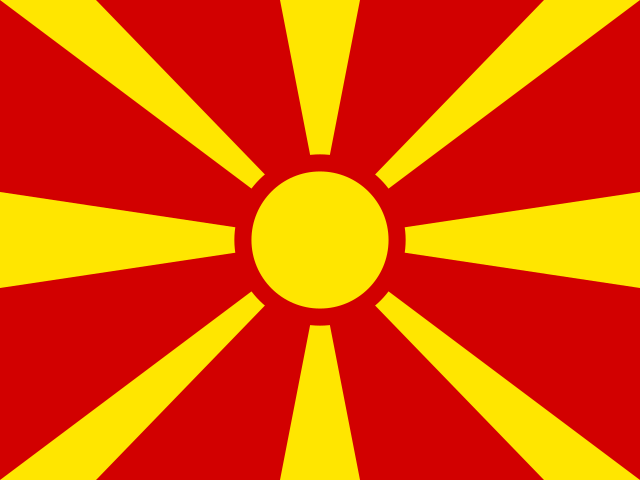
- Flag meaning
- Description: a red field with a yellow sun (the Sun of Liberty) in the center, with eight broadening rays extending to the edgesMeaning: the red and yellow colors have long been associated with Macedonia
- National symbols
- eight-rayed sun
- National colours
- red, yellow
- National anthem
- Title: "Denes nad Makedonija" (Today Over Macedonia)Lyrics/music: Vlado MALESKI/Todor SKALOVSKIHistory: written in 1943 and adopted in 1991, the song previously served as the anthem of the Socialist Republic of Macedonia, when it was part of Yugoslavia
- UNESCO World Heritage Sites
- Total World Heritage Sites: 2 (both natural)Selected World Heritage Site locales: Natural and Cultural Heritage of the Ohrid Region; Ancient and Primeval Beech Forests of the Carpathians
Economy
- Overview
- upper-middle-income European economy; GDP growth driven by private consumption, public infrastructure investments, and wage growth; stalled progress on EU accession; public debt rising due to high pensions, wages, and interest payments; structural challenges of emigration, low productivity growth, and governance
- GDP (PPP)
- $43.844 billion (2024 est.)
- GDP per person (PPP)
- $24,500 (2024 est.)
- GDP growth
- 2.8% (2024 est.)
- Inflation
- 3.5% (2024 est.)
- Unemployment
- 13.5% (2024 est.)
- Below poverty line
- 21.8% (2019 est.)
- Farm products
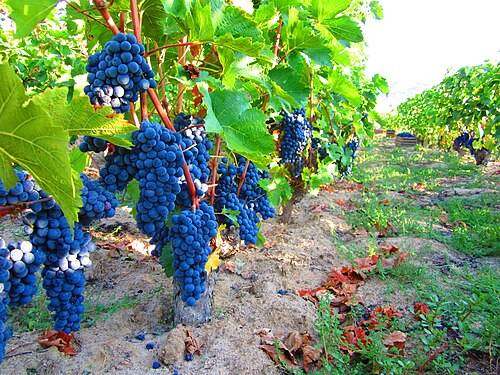
- chillies/peppers, milk, wheat, potatoes, grapes, barley, cabbages, maize, watermelons, tomatoes (2023)
- Industries
- food processing, beverages, textiles, chemicals, iron, steel, cement, energy, pharmaceuticals, automotive parts
- Exports
- $10.445 billion (2024 est.)
- Main exports
- reaction and catalytic products, insulated wire, electricity, garments, seats (2023)
- Export partners
- Germany 39%, Serbia 8%, Bulgaria 6%, Greece 5%, Czechia 3% (2023)
- Main imports
- platinum, refined petroleum, laboratory ceramic ware, cars, natural gas (2023)
- Import partners
- UK 12%, Germany 10%, Greece 9%, China 9%, Serbia 8% (2023)
- Money sent home from abroad
- 2.7% of GDP (2024 est.)
Energy, internet and transport
- Electricity access
- Electrification - total population: 100% (2022 est.)
- Electricity sources
- Fossil fuels: 68.2% of total installed capacity (2023 est.)Solar: 4.6% of total installed capacity (2023 est.)Wind: 2.3% of total installed capacity (2023 est.)Hydroelectricity: 24% of total installed capacity (2023 est.)Biomass and waste: 0.8% of total installed capacity (2023 est.)
- Internet users
- Percent of population: 87% (2023 est.)
- Mobile phones
- Total subscriptions: 1.98 million (2024 est.)Subscriptions per 100 inhabitants: 108 (2024 est.)
- TV and radio
- public TV broadcaster Macedonian Radio and Television operates 5 national terrestrial TV channels and 2 satellite TV channels; 11 regional TV stations broadcast nationally; 29 regional and local broadcasters; a large number of cable operators offer domestic and international programming; the public radio broadcaster operates 3 stations; 4 privately owned national radio stations and 60 regional and local operators (2023)
- Airports
- 13 (2025)
- Railways
- Total: 699 km (2020) 313 km electrified
Military and space
- Armed forces
- Army of the Republic of North Macedonia (ARSM or ARNM): joint force with air, ground, reserve, special operations, and support forces (2025)
- Military spending
- 2% of GDP (2025 est.)
- Military service
- 18 years of age for voluntary military service; conscription abolished in 2007 (2025)
Global issues
- Refugees and displaced people
- Refugees: 20,937 (2024 est.)Stateless persons: 159 (2024 est.)
Neighbouring countries
- Phone code
- +389
- Internet domain
- .mk