Bulgaria
Republic of Bulgaria · България
One of Europe's oldest states, founded 681; its empires rivalled Byzantium. Ottoman rule lasted nearly five centuries until 1878. Communist 1946–1989; joined NATO in 2004, the EU in 2007 and the euro in 2026.
See Bulgaria on the 3D globeTake a quiz
Population6.4 million
Area110,879 km²
CapitalSofia
RegionSoutheast Europe
Did you know?
- Produces a large share of the world's rose oil for perfume
- Plovdiv is among Europe's oldest continuously inhabited cities
- Lactobacillus bulgaricus, the yoghurt bacterium, is named after it
Key facts about Bulgaria
- Government
- Parliamentary republic
- Religion
- Eastern Orthodox ~71%, Islam ~10%
- Founded / independence
- 681 (First Bulgarian Empire); 1878/1908 modern
- Rich in
- Agriculture (rose oil), copper, IT outsourcing, Black Sea tourism
- Languages
- Bulgarian
Bulgarian (Cyrillic was developed here); Turkish minority; eastern and western dialect split by the yat boundary - Currency
- Bulgarian lev (лв)
- People are called
- Bulgarian
- Main cities
- Sofia, Plovdiv, Varna, Burgas, Ruse
Timeline of Bulgaria
- 681First Bulgarian Empire
- 864Adopts Christianity
- 1396Ottoman conquest
- 1878Liberation
- 1908Full independence
- 1946Communist republic
- 2007Joins EU
- 2026Adopts the euro
Places to see in Bulgaria
- Rila Monastery
- Plovdiv old town and Roman theatre
- Veliko Tarnovo
- Alexander Nevsky Cathedral
- Black Sea resorts
Food and drink
Banitsa · shopska salad · kebapche · Bulgarian yoghurt
Culture and famous for
Rose oil (Valley of Roses); Cyrillic alphabet; polyphonic singing; Martenitsa red-and-white bracelets
Popular sports
Football, wrestling, weightlifting, rhythmic gymnastics
Geography and climate
- Highest point
- Musala, 2,925 m
- Rivers, lakes and seas
- Danube; Maritsa; Black Sea coast
- Climate
- Continental, mild on the coast
- Coastline
- Has a sea coast
- Population density
- 58 people per km²
Wars and conflicts
- Balkan Wars
- WWI and WWII (on German side)
- Russo-Turkish War 1877–78
Empires and states that once stood here
First and Second Bulgarian Empires 681–1396
Alliances and memberships
Military and security
Political unions and regional organisations
European UnionEurozoneCouncil of Europe
Economy and trade
Bulgaria in depth
Detailed facts from the CIA World Factbook (public domain, latest edition).
Overview
- History in brief
- The Bulgars, a Central Asian Turkic tribe, merged with the local Slavic inhabitants in the late 7th century to form the first Bulgarian state. In succeeding centuries, Bulgaria struggled with the Byzantine Empire to assert its place in the Balkans, but by the end of the 14th century, the Ottoman Turks overran the country. Northern Bulgaria attained autonomy in 1878, and all of Bulgaria became independent from the Ottoman Empire in 1908. Having fought on the losing side in both World Wars, Bulgaria fell within the Soviet sphere of influence and became a People's Republic in 1946. Communist domination ended in 1990, when Bulgaria held its first multiparty election since World War II and began the contentious process of moving toward political democracy and a market economy while combating inflation, unemployment, corruption, and crime. The country joined NATO in 2004, the EU in 2007, and the Schengen Area for air and sea travel in 2024.
Geography
- Location
- Southeastern Europe, bordering the Black Sea, between Romania and Turkey
- Size compared
- almost identical in size to Virginia; slightly larger than Tennessee
- Land borders
- Total: 1,806 kmBorder countries: Greece 472 km; Macedonia 162 km; Romania 605 km; Serbia 344 km; Turkey 223 km
- Coastline
- 354 km
- Climate
- temperate; cold, damp winters; hot, dry summers
- Terrain
- mostly mountains with lowlands in north and southeast
- Elevation
- Highest point: Musala 2,925 mLowest point: Black Sea 0 mMean elevation: 472 m
- Natural resources
- bauxite, copper, lead, zinc, coal, timber, arable land
- Major rivers
- Dunav (Danube) (shared with Germany [s], Austria, Slovakia, Hungary, Croatia, Serbia, Ukraine, Moldova, and Romania [m]) - 2,888 kmNote: [s] after country name indicates river source; [m] after country name indicates river mouth
- Natural hazards
- earthquakes; landslides
- Notes
- strategic location near Turkish Straits; controls key land routes from Europe to Middle East and Asia
- Environmental issues
- air pollution from industrial emissions; rivers polluted from raw sewage, heavy metals, detergents; deforestation; forest damage from air pollution and acid rain; soil contamination from heavy metals from metallurgical plants and industrial wastes
People and society
- Population
- Total: 6,737,997 (2025 est.)Male: 3,281,215Female: 3,456,782
- Nationality
- Noun: Bulgarian(s)Adjective: Bulgarian
- Ethnic groups
- Bulgarian 78.5%, Turkish 7.8%, Roma 4.1%, other 1.2%, unspecified 9.4% (2021 est.)
- Languages
- Bulgarian (official) 77.3%, Turkish 7.9%, Romani 3.5%, other 1%, unspecified 10.4% (2021 est.)Major-language sample(s): Светoвен Алманах, незаменимият източник за основна информация. (Bulgarian)The World Factbook, the indispensable source for basic information.
- Religions
- Christian 64.7%, Muslim 9.8%, other 0.1%, none 4.7%, unspecified 20.7% (2021 est.)
- Median age
- Total: 45.5 years (2025 est.)Male: 43.3 yearsFemale: 47 years
- Population growth
- -0.66% (2025 est.)
- Life expectancy
- Total population: 76.1 years (2024 est.)Male: 72.9 yearsFemale: 79.4 years
- Children per woman
- 1.52 children born/woman (2025 est.)
- Urbanization
- Urban population: 76.7% of total population (2023)Rate of urbanization: -0.28% annual rate of change (2020-25 est.)
- Largest cities
- 1.288 million SOFIA (capital) (2023)
- Years in school
- Total: 15 years (2023 est.)Male: 15 years (2023 est.)Female: 16 years (2023 est.)
Government
- Official names
- Conventional long form: Republic of BulgariaConventional short form: BulgariaLocal long form: Republika BulgariaLocal short form: BulgariaFormer: Kingdom of Bulgaria, People's Republic of BulgariaEtymology: named after the Bulgar tribes who settled the lower Balkan region in the 7th century A.D.; the tribal name may come from the Turkic word bulga, or "mixed," referring to the blend of Turkic and Slavic ethnicities in the tribes
- Government type
- parliamentary republic
- Capital
- Name: SofiaGeographic coordinates: 42 41 N, 23 19 ETime difference: UTC+2 (7 hours ahead of Washington, DC, during Standard Time)Daylight saving time: +1hr, begins last Sunday in March; ends last Sunday in OctoberEtymology: named after the Church of Saint Sofia in the city, parts of which may date to the 4th century
- Regions
- 28 provinces (oblasti, singular - oblast); Blagoevgrad, Burgas, Dobrich, Gabrovo, Haskovo, Kardzhali, Kyustendil, Lovech, Montana, Pazardzhik, Pernik, Pleven, Plovdiv, Razgrad, Ruse, Shumen, Silistra, Sliven, Smolyan, Sofia, Sofia-Grad (Sofia City), Stara Zagora, Targovishte, Varna, Veliko Tarnovo, Vidin, Vratsa, Yambol
- Independence
- 3 March 1878 (as an autonomous principality within the Ottoman Empire); 22 September 1908 (complete independence from the Ottoman Empire)
- National holiday
- Liberation Day, 3 March (1878)
- Constitution
- History: several previous; latest drafted between late 1990 and early 1991, adopted 13 July 1991Amendment process: proposed by the National Assembly or by the president of the republic; passage requires three-fourths majority vote of National Assembly members in three ballots; signed by the National Assembly chairperson; note - under special circumstances, a "Grand National Assembly" is elected with the authority to write a new constitution and amend certain articles of the constitution, including those affecting basic civil rights and national sovereignty; passage requires at least two-thirds majority vote in each of several readings
- Legal system
- civil law
- Voting age
- 18 years of age; universal
- Flag meaning
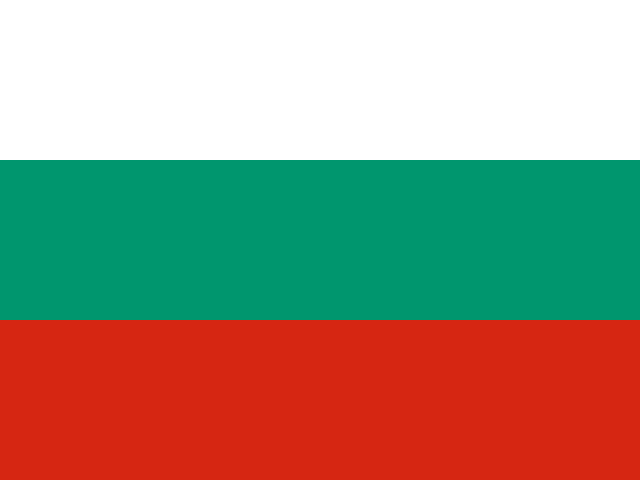
- Description: three equal horizontal bands of white (top), green, and redMeaning: white stands for peace, love, and freedom; green for the country's agricultural wealth; red for the independence struggle and military courageHistory: originally adopted in 1879 as a modified version of the Russian tricolor flag, using green instead of blue; the communist coat of arms was added to the flag in various forms between 1948 and 1990, when it was removed after the communist government collapsed
- National symbols
- lion
- National colours
- white, green, red
- National anthem
- Title: “Mila Rodino” (Dear Homeland)Lyrics/music: Tsvetan RADOSLAVOVHistory: adopted 1964; composed in 1885 by a student en route to fight in the Serbo-Bulgarian War
- UNESCO World Heritage Sites
- Total World Heritage Sites: 10 (7 cultural, 3 natural)Selected World Heritage Site locales: Boyana Church (c); Madara Rider (c); Thracian Tomb of Kazanlak (c); Rock-Hewn Churches of Ivanovo (c); Rila Monastery (c); Ancient City of Nessebar (c); Thracian Tomb of Sveshtari (c); Srebarna Nature Reserve (n); Pirin National Park (n); Primeval Beech Forests of the Carpathians (n)
Economy
- Overview
- upper-middle-income EU economy; currency pegged to the euro, with eurozone accession pending; declining energy prices helping lower inflation rate; EU structural funds contributing to investment recovery; skilled labor shortage driven by emigration and aging population
- GDP (PPP)
- $219.645 billion (2024 est.)
- GDP per person (PPP)
- $34,100 (2024 est.)
- GDP growth
- 2.8% (2024 est.)
- Inflation
- 2.4% (2024 est.)
- Unemployment
- 4.2% (2024 est.)
- Below poverty line
- 20.6% (2022 est.)
- Farm products
- wheat, maize, sunflower seeds, barley, milk, rapeseed, grapes, potatoes, triticale, tomatoes (2023)
- Industries
- electricity, gas, water; food, beverages, tobacco; machinery and equipment, automotive parts, base metals, chemical products, coke, refined petroleum, nuclear fuel; outsourcing centers
- Exports
- $62.661 billion (2024 est.)
- Main exports
- refined petroleum, garments, refined copper, wheat, natural gas (2023)
- Export partners
- Germany 14%, Romania 11%, Italy 8%, Greece 6%, Turkey 5% (2023)
- Main imports
- crude petroleum, copper ore, cars, packaged medicine, electricity (2023)
- Import partners
- Germany 12%, Turkey 8%, Romania 8%, Russia 7%, Italy 6% (2023)
- Money sent home from abroad
- 2.4% of GDP (2024 est.)
Energy, internet and transport
- Electricity access
- Electrification - total population: 100% (2022 est.)Electrification - urban areas: 100%Electrification - rural areas: 99.6%
- Electricity sources
- Fossil fuels: 35.2% of total installed capacity (2023 est.)Nuclear: 40.9% of total installed capacity (2023 est.)Solar: 8.2% of total installed capacity (2023 est.)Wind: 4% of total installed capacity (2023 est.)Hydroelectricity: 7.5% of total installed capacity (2023 est.)Biomass and waste: 4.1% of total installed capacity (2023 est.)
- Internet users
- Percent of population: 80% (2023 est.)
- Mobile phones
- Total subscriptions: 7.98 million (2024 est.)Subscriptions per 100 inhabitants: 118 (2024 est.)
- TV and radio
- 4 national terrestrial TV stations with 1 state-owned and 3 privately owned; a vast array of TV stations are available from cable and satellite TV providers; state-owned national radio broadcasts over 3 networks; large number of private radio stations, especially in urban areas
- Airports
- 107 (2025)
- Railways
- Total: 4,029 km (2020) 2,871 km electrified
- Merchant ships
- Total: 78 (2023)By type: bulk carrier 2, general cargo 13, oil tanker 8, other 55
Military and space
- Armed forces
- Bulgarian Armed Forces (aka Bulgarian Army): Land Forces, Air Force, NavyMinistry of Interior: General Directorate National Police (GDNP), General Directorate Border Police (GDBP), Special Unit for Combating Terrorism (SOBT) (2025)
- Military spending
- 2.1% of GDP (2025 est.)
- Military service
- 18 years of age for voluntary service for men and women (2025)
- Space programme
- has a long history of space-related activities going back to the 1960s; develops, produces, and operates satellites; researches, develops, and produces other space technologies, including those related to astrophysics, remote sensing, data exploitation, optics, and electronics; has specialized in producing scientific instruments for space research; has more than 20 research institutes; Cooperating State of the ESA since 2015; works with a variety of foreign space agencies and commercial entities, including those of the ESA, EU, individual ESA and EU member states, India, Japan, Russia, and the US (2025)
- Space milestones
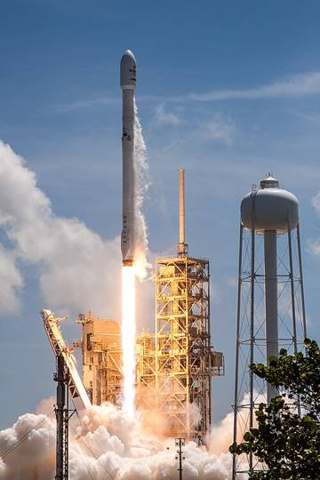
- 1960s-1990s - participated in the Soviet Interkosmos program, which included the first Bulgarian in space (1979), first domestically produced scientific satellite launched on a Soviet rocket (1981), and participation in the Soviet VEGA project (1985)2017 - first communications satellite (BulgariaSat-1) built and launched by US2019 - first domestically built data/educational cube satellite (EnduroSat-1) launched by US2023 - signed the US-led Artemis Accords outlining principles for cooperation in space exploration2025 - domestically produced, multispectral remote sensing satellite (Balkan-1) launched by US as part of EU's Copernicus Earth observation program
Global issues
- Refugees and displaced people
- Refugees: 114,728 (2024 est.)Stateless persons: 862 (2024 est.)
Neighbouring countries
GreeceNorth MacedoniaRomaniaSerbiaTürkiye
- Phone code
- +359
- Internet domain
- .bg