Turkmenistan
Turkmenistan · Туркмения · Türkmenistan
Ancient Merv was among the world's largest cities. Absorbed by Russia, then the USSR. Now one of the world's most closed states, run by a father and son.
See Turkmenistan on the 3D globeTake a quiz
Population7.2 million
Area488,100 km²
CapitalAshgabat
RegionCentral Asia
Did you know?
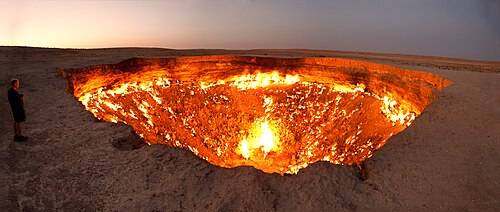
- The Darvaza crater has burned since about 1971
- Ashgabat has the most white marble buildings in the world
- The Karakum Desert covers about 80% of the country
Key facts about Turkmenistan
- Government
- Presidential republic (authoritarian)
- Religion
- Sunni Islam ~93%
- Founded / independence
- 1991 (from USSR)
- Rich in
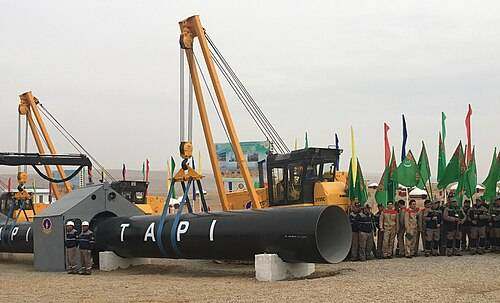
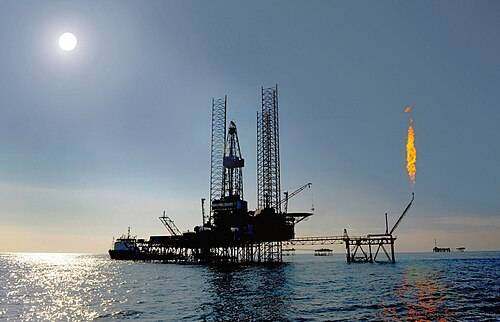
- Natural gas (fourth-largest reserves), cotton
- Languages
- Russian, Turkmen
Turkmen; Russian, Uzbek - Currency
- Turkmenistan manat (m)
- People are called
- Turkmen
- Main cities
- Ashgabat, Türkmenabat, Daşoguz, Mary
Timeline of Turkmenistan
- 1881Russian conquest
- 1924Soviet republic
- 1991Independence
- 1995Declares permanent neutrality
Places to see in Turkmenistan
- Darvaza gas crater ("Door to Hell")
- Merv ruins
- Nisa
- Ashgabat's white marble city
Food and drink
Plov · shashlik · churek bread
Culture and famous for
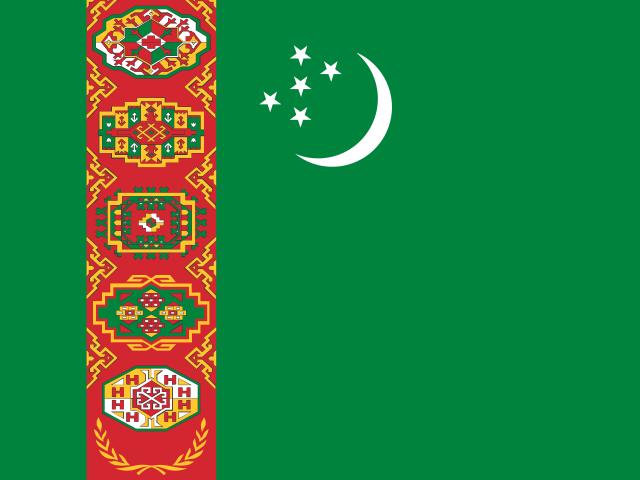
Akhal-Teke horses; carpets (on the flag)
Popular sports
Football, wrestling
Geography and climate
- Highest point
- Ayrybaba, 3,139 m
- Rivers, lakes and seas
- Amu Darya; Karakum Canal
- Climate
- Hot desert
- Coastline
- Landlocked
- Population density
- 15 people per km²
Wars and conflicts
- Russian conquest 1881 (Geok Tepe)
Empires and states that once stood here
Alliances and memberships
Political unions and regional organisations
Commonwealth of Independent States (associate member)Organization of Turkic States (observer)Organisation of Islamic Cooperation
Turkmenistan in depth
Detailed facts from the CIA World Factbook (public domain, latest edition).
Overview
- History in brief
- Present-day Turkmenistan has been at the crossroads of civilizations for centuries. Various Persian empires ruled the area in antiquity, and Alexander the Great, Muslim armies, the Mongols, Turkic warriors, and eventually the Russians conquered it. In medieval times, Merv (located in present-day Mary province) was one of the great cities of the Islamic world and an important stop on the Silk Road. Annexed by Russia in the late 1800s, Turkmen territories later figured prominently in the anti-Bolshevik resistance in Central Asia. In 1924, Turkmenistan became a Soviet republic; it achieved independence when the USSR dissolved in 1991.President for Life Saparmurat NIYAZOV died in 2006, and Gurbanguly BERDIMUHAMEDOV, a deputy chairman under NIYAZOW, emerged as the country's new president. BERDIMUHAMEDOV won Turkmenistan's first multi-candidate presidential election in 2007, and again in 2012 and 2017 with over 97% of the vote in elections widely regarded as undemocratic. In 2022, BERDIMUHAMEDOV announced that he would step down from the presidency and called for an election to replace him. His son, Serdar BERDIMUHAMEDOV, won the ensuing election with 73% of the vote. Gurbanguly BERDIMUHAMEDOV, although no longer head of state, maintains an influential political position as head of the Halk Maslahaty (People’s Council) and as National Leader of the Turkmen People, a title that provides additional privileges and immunity for him and his family. Since Gurbanguly BERDIMUHAMEDOV stepped down from the presidency, state-controlled media upgraded his honorific from Arkadag (protector) to Hero-Arkadag, and began referring to Serdar BERDIMUHAMEDOV as Arkadagly Serdar, which can be translated as "Serdar who has a protector to support him."Turkmenistan has sought new export markets for its extensive hydrocarbon/natural gas reserves, which have yet to be fully exploited. Turkmenistan's reliance on gas exports has made the economy vulnerable to fluctuations in the global energy market, and economic hardships since the drop in energy prices in 2014 have led many citizens of Turkmenistan to emigrate, mostly to Turkey.
Geography
- Location
- Central Asia, bordering the Caspian Sea, between Iran and Kazakhstan
- Size compared
- slightly more than three times the size of Georgia; slightly larger than California
- Land borders
- Total: 4,158 kmBorder countries: Afghanistan 804 km; Iran 1,148 km; Kazakhstan 413 km; Uzbekistan 1,793 km
- Coastline
- 0 km (landlocked)
- Climate
- subtropical desert
- Terrain
- flat-to-rolling sandy desert with dunes rising to mountains in the south; low mountains along border with Iran; borders Caspian Sea in west
- Elevation
- Highest point: Gora Ayribaba 3,139 mLowest point: Vpadina Akchanaya (Sarygamysh Koli is a lake in northern Turkmenistan with a water level that fluctuates above and below the elevation of Vpadina Akchanaya, the lake has dropped as low as -110 m) -81 mMean elevation: 230 m
- Natural resources
- petroleum, natural gas, sulfur, salt
- Major rivers
- Amu Darya (shared with Tajikistan [s], Afghanistan, and Uzbekistan [m]) - 2,620 kmNote: [s] after country name indicates river source; [m] after country name indicates river mouth
- Major lakes
- Salt water lake(s): Caspian Sea (shared with Iran, Azerbaijan, Russia, and Kazakhstan) - 374,000 sq km
- Natural hazards
- earthquakes; mudslides; droughts; dust storms; floods
- Notes
- landlocked; the western and central low-lying desolate portions of the country make up the great Garagum (Kara-Kum) desert, which occupies over 80% of the country; eastern part is plateau
- Environmental issues
- soil and groundwater pollution from agricultural chemicals and pesticides; salination, waterlogging of soil due to poor irrigation methods; Caspian Sea pollution; river diversion for irrigation; soil erosion; desertification
People and society
- Population
- Total: 5,744,151 (2024 est.)Male: 2,842,870Female: 2,901,281
- Nationality
- Noun: Turkmenistani(s)Adjective: Turkmenistani
- Ethnic groups
- Turkmen 85%, Uzbek 5%, Russian 4%, other 6% (2003 est.)
- Languages
- Turkmen (official) 72%, Russian 12%, Uzbek 9%, other 7%Major-language sample(s): Dünýä Faktlar Kitaby – esasy maglumatlaryň wajyp çeşmesidir (Turkmen)The World Factbook, the indispensable source for basic information.
- Religions
- Muslim 93%, Christian 6.4%, Buddhist <1%, folk religion <1%, Jewish <1%, other <1%, unspecified <1% (2020 est.)
- Median age
- Total: 31.6 years (2025 est.)Male: 30.7 yearsFemale: 31.7 years
- Population growth
- 0.88% (2025 est.)
- Life expectancy
- Total population: 72.4 years (2024 est.)Male: 69.4 yearsFemale: 75.5 years
- Children per woman
- 2.02 children born/woman (2025 est.)
- Urbanization
- Urban population: 54% of total population (2023)Rate of urbanization: 2.23% annual rate of change (2020-25 est.)
- Largest cities
- 902,000 ASHGABAT (capital) (2023)
- Literacy
- Total population: 99.9% (2022 est.)Male: 99.9% (2022 est.)Female: 99.9% (2022 est.)
- Years in school
- Total: 13 years (2023 est.)Male: 12 years (2022 est.)Female: 12 years (2022 est.)
Government
- Official names
- Conventional long form: noneConventional short form: TurkmenistanLocal long form: noneLocal short form: TurkmenistanFormer: Turkmen Soviet Socialist RepublicEtymology: the suffix -stan means "land," so the country name means the "Land of the Turkmen [people];" the people's name means "Turk-like," from the Persian words tork and mandan, referring to their formerly nomadic lifestyle that differed from the settled Turks of Turkey
- Government type
- presidential republic; authoritarian
- Capital
- Name: Ashgabat (Ashkhabad)Geographic coordinates: 37 57 N, 58 23 ETime difference: UTC+5 (10 hours ahead of Washington, DC, during Standard Time)Etymology: derived from the Turkmen words ushq, meaning "love," and abad, meaning "inhabited place" or "town;" the city was originally a military outpost built in 1881 that took its name from an ancient settlement on the site
- Regions
- 5 provinces (velayatlar, singular - velayat) and 1 independent city*: Ahal Velayat (Arkadag), Ashgabat*, Balkan Velayat (Balkanabat), Dashoguz Velayat, Lebap Velayat (Turkmenabat), Mary Velayat
- Independence
- 27 October 1991 (from the Soviet Union)
- National holiday
- Independence Day, 27 October (1991)
- Constitution
- History: several previous; latest adopted 14 September 2016Amendment process: proposed by the Assembly or Mejlis; passage requires two-thirds majority vote or absolute majority approval in a referendum
- Legal system
- civil law system with Islamic (sharia) law influences
- Voting age
- 18 years of age; universal
- Flag meaning
- Description: green field with a vertical red stripe near the left side; the stripe has five tribal guls (designs used in producing carpets) stacked above two crossed olive branches; five five-pointed white stars and a white crescent moon appear in the upper left corner of the main fieldMeaning: the green color and crescent moon stand for Islam, the five stars for the country's regions, and the guls for national identity
- National symbols
- Akhal-Teke horse
- National colours
- green, white
- National anthem
- Title: "Garaşsyz, Bitarap Türkmenistanyň" (Independent, Neutral, Turkmenistan State Anthem)Lyrics/music: collective/Veli MUKHATOVHistory: adopted 1997; lyrics revised in 2008 to eliminate references to deceased President Saparmurat NYYAZOW
- UNESCO World Heritage Sites
- Total World Heritage Sites: 5 (4 cultural, 1 natural)Selected World Heritage Site locales: Ancient Merv (c); Kunya-Urgench (c); Parthian Fortresses of Nisa (c); Cold Winter Deserts of Turan (n); Silk Roads: Zarafshan-Karakum Corridor (c)
Economy
- Overview
- upper-middle-income Central Asian economy; houses fourth-largest natural gas reserves and rich in natural resources; authoritarian and dominated by state-owned enterprises; challenges include overvalued currency, high inflation risks, lack of economic diversification due to heavy state control and bureaucracy
- GDP (PPP)
- $134.555 billion (2024 est.)
- GDP per person (PPP)
- $18,000 (2024 est.)
- GDP growth
- 2.3% (2024 est.)
- Inflation
- 11.5% (2022 est.)
- Unemployment
- 4.4% (2024 est.)
- Farm products
- milk, wheat, potatoes, cotton, watermelons, tomatoes, grapes, barley, beef, lamb/mutton (2023)
- Industries
- natural gas, oil, petroleum products, textiles, food processing
- Exports
- $13.111 billion (2023 est.)
- Main exports
- natural gas, refined petroleum, fertilizers, crude petroleum, electricity (2023)
- Export partners
- China 63%, Turkey 11%, Greece 7%, Uzbekistan 6%, Azerbaijan 4% (2023)
- Main imports
- broadcasting equipment, cars, wheat, computers, iron pipes (2023)
- Import partners
- Turkey 21%, UAE 21%, China 20%, Kazakhstan 8%, Germany 5% (2023)
- Money sent home from abroad
- 0% of GDP (2023 est.)
Energy, internet and transport
- Electricity access
- Electrification - total population: 100% (2022 est.)
- Electricity sources
- Fossil fuels: 100% of total installed capacity (2023 est.)
- Internet users
- Percent of population: 21% (2017 est.)
- Mobile phones
- Total subscriptions: 6.25 million (2021 est.)Subscriptions per 100 inhabitants: 99 (2021 est.)
- TV and radio
- state-controlled broadcast media; 7 state-owned TV and 4 state-owned radio networks; satellite dishes available for other broadcasts; officials sometimes limit access to satellite TV by removing satellite dishes
- Airports
- 23 (2025)
- Railways
- Total: 5,113 km (2017)Broad gauge: 5,113 km (2017) 1.520-m gauge
- Merchant ships
- Total: 73 (2023)By type: general cargo 6, oil tanker 8, other 59
Military and space
- Armed forces
- Armed Forces of Turkmenistan (aka Turkmen National Army): Ground Forces, Air Force, NavyMinistry of Internal Affairs: Internal Troops, Turkmen (National) Police, Federal/State Border Guard Service (2025)
- Military spending
- 1.9% of GDP (2019 est.)
- Military service
- 18-27 years of age for compulsory military service for men and volunteer service for men and women; 24-month conscript service obligation (2025)
- Space programme
- has a small space program focused on acquiring satellites and developing the infrastructure to build and operate satellites; particularly interested in communications and remote sensing satellites; has cooperated with the space agencies and/or space industries of France, Italy, Russia, South Korea, and the US (2025)
- Space milestones
- 2015 - first commercial telecommunications satellite (Turkmen Sat 52E) built by European company and launched by US2024 - announced beginning of program to develop or acquire a second communications satellite
Global issues
- Refugees and displaced people
- Refugees: 3,409 (2024 est.)
Neighbouring countries
AfghanistanIranKazakhstanUzbekistan
- Phone code
- +993
- Internet domain
- .tm