Azerbaijan
Republic of Azerbaijan · Azərbaycan · Азербайджан
Part of Persian empires for centuries, then Russian. The 1918 Azerbaijan Democratic Republic was the first secular Muslim-majority republic. Retook Nagorno-Karabakh in 2020 and 2023.
See Azerbaijan on the 3D globeTake a quiz
Population10.2 million
Area86,600 km²
CapitalBaku
RegionWestern Asia
Did you know?
- Has about half of the world's mud volcanoes
- Baku had one of the first oil booms in the 1800s
- Its name is linked to "land of fire" from natural gas flames
Key facts about Azerbaijan
- Government
- Presidential republic (authoritarian)
- Religion
- Shia Islam ~85%, Sunni ~15%
- Founded / independence
- 1918; 1991 (from USSR)
- Rich in
- Oil and gas (Caspian), pipelines
- Languages
- Azerbaijani, Russian
Azerbaijani (Turkic); Lezgian, Talysh, Russian - Currency
- Azerbaijani manat (₼)
- People are called
- Azerbaijani
- Main cities
- Baku, Ganja, Sumgait
Timeline of Azerbaijan
- 1918First republic
- 1920Soviet rule
- 1991Independence
- 1994Ceasefire after Karabakh war
- 2020Retakes districts
- 2023Retakes Karabakh
Places to see in Azerbaijan
- Baku Old City
- Flame Towers
- Gobustan rock art and mud volcanoes
- Sheki Khan's Palace
- Yanar Dag burning hillside
Food and drink
Plov · dolma · qutab · dushbara
Culture and famous for
Mugham music; carpet weaving; "land of fire"
Popular sports
Wrestling, chess, football
Geography and climate
- Highest point
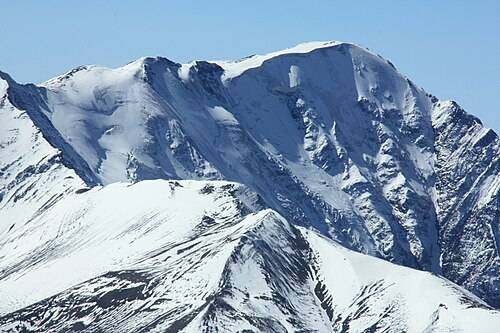
- Bazardüzü, 4,466 m
- Rivers, lakes and seas
- Caspian Sea coast; Kura River
- Climate
- Nine of the world's eleven climate zones
- Coastline
- Landlocked
- Population density
- 118 people per km²
Wars and conflicts
- Nagorno-Karabakh wars 1988–94, 2020, 2023
Empires and states that once stood here
Republic of Artsakh (Nagorno-Karabakh) 1991–2023
Alliances and memberships
Political unions and regional organisations
Council of EuropeCommonwealth of Independent StatesOrganization of Turkic StatesOrganisation of Islamic Cooperation
Economy and trade
OPEC (OPEC+ partner (not a member))
Defence treaties
- Turkey–Azerbaijan Shusha Declaration (2021): Alliance pledging mutual military help — "one nation, two states".
Azerbaijan in depth
Detailed facts from the CIA World Factbook (public domain, latest edition).
Overview
- History in brief
- Azerbaijan -- a secular nation with a majority-Turkic and majority-Shia Muslim population -- was briefly independent (from 1918 to 1920) following the collapse of the Russian Empire; it was subsequently incorporated into the Soviet Union for seven decades.Beginning in 1988, Azerbaijan and Armenia fought over the Nagorno-Karabakh region, which was populated largely by ethnic Armenians but incorporated into Soviet Azerbaijan as an autonomous oblast in the early 1920s. In the late Soviet period, an ethnic-Armenian separatist movement sought to end Azerbaijani control over the region. Fighting over Nagorno-Karabakh escalated after Armenia and Azerbaijan gained independence from the Soviet Union in 1991. By the time a ceasefire took effect in 1994, separatists with Armenian support controlled Nagorno‑Karabakh and seven surrounding Azerbaijani territories. After decades of cease-fire violations and sporadic flare-ups, a second sustained conflict began in 2020 when Azerbaijan tried to win back the territories it had lost in the 1990s. After significant Azerbaijani gains, Armenia returned the southern part of Nagorno-Karabakh and the surrounding territories to Azerbaijan. In September 2023, Azerbaijan took military action to regain the rest of Nagorno-Karabakh; after a conflict that lasted only one day, nearly the entire ethnic Armenian population of Nagorno-Karabakh fled to Armenia.Since gaining its independence in 1991, Azerbaijan has significantly reduced the poverty rate and has directed some revenue from its oil and gas production to develop the country’s infrastructure. However, corruption remains a burden on the economy, and Western observers and members of the country’s political opposition have accused the government of authoritarianism. The country’s leadership has remained in the ALIYEV family since Heydar ALIYEV, the most highly ranked Azerbaijani member of the Communist Party during the Soviet period, became president during the first Nagorno-Karabakh War in 1993.
Geography
- Location
- Southwestern Asia, bordering the Caspian Sea, between Iran and Russia, with a small European portion north of the Caucasus range
- Size compared
- about three-quarters the size of Pennsylvania; slightly smaller than Maine
- Land borders
- Total: 2,468 kmBorder countries: Armenia 996 km; Georgia 428 km; Iran 689 km; Russia 338 km; Turkey 17 km
- Coastline
- 0 km (landlocked)
- Climate
- dry, semiarid steppe
- Terrain
- large, flat Kur-Araz Ovaligi (Kura-Araks Lowland, much of it below sea level) with Great Caucasus Mountains to the north, Qarabag Yaylasi (Karabakh Upland) to the west; Baku lies on Abseron Yasaqligi (Apsheron Peninsula) that juts into Caspian Sea
- Elevation
- Highest point: Bazarduzu Dagi 4,466 mLowest point: Caspian Sea -28 mMean elevation: 384 m
- Natural resources
- petroleum, natural gas, iron ore, nonferrous metals, bauxite
- Major lakes
- Salt water lake(s): Caspian Sea (shared with Iran, Russia, Turkmenistan, and Kazakhstan) - 374,000 sq km
- Natural hazards
- droughts
- Notes
- both the main area of the country and the Naxcivan exclave are landlocked
- Environmental issues
- severe air, soil, and water pollution; soil pollution from oil spills, pesticides, and toxic defoliants used in producing cotton; surface and underground water pollution from untreated municipal and industrial wastewater and agricultural run-off
People and society
- Population
- Total: 10,694,370 (2025 est.)Male: 5,354,376Female: 5,339,994
- Nationality
- Noun: Azerbaijani(s)Adjective: Azerbaijani
- Ethnic groups
- Azerbaijani 94.8%, other 1.8%; less than 1%: Talish, Russian, Avar, Sakhur, Tartar, Georgian, Jewish, Kurd(2019 est.)
- Languages
- Azerbaijani 96.1%, other 1.4%; less than 1%: Russian, Avar, Talyshi, Turkish, Tatar, Sakhur, Tat, Ukrainian, Georgian, Hebrew (2019 est.)Major-language sample(s): Dünya fakt kitabı, əsas məlumatlar üçün əvəz olunmaz mənbədir (Azerbaijani)The World Factbook, the indispensable source for basic information.
- Religions
- Muslim 97.3% (predominantly Shia), Christian 2.6%, other <0.1, unaffiliated <0.1 (2020 est.)
- Median age
- Total: 34.8 years (2025 est.)Male: 32.8 yearsFemale: 36 years
- Population growth
- 0.4% (2025 est.)
- Life expectancy
- Total population: 75.9 years (2024 est.)Male: 73.5 yearsFemale: 78.6 years
- Children per woman
- 1.69 children born/woman (2025 est.)
- Urbanization
- Urban population: 57.6% of total population (2023)Rate of urbanization: 1.38% annual rate of change (2020-25 est.)
- Largest cities
- 2.432 million BAKU (capital) (2023)
- Literacy
- Total population: 99.8% (2023 est.)Male: 99.8% (2023 est.)Female: 99.7% (2023 est.)
- Years in school
- Total: 13 years (2023 est.)Male: 13 years (2023 est.)Female: 13 years (2023 est.)
Government
- Official names
- Conventional long form: Republic of AzerbaijanConventional short form: AzerbaijanLocal long form: Azarbaycan RespublikasiLocal short form: AzarbaycanFormer: Azerbaijan Soviet Socialist RepublicEtymology: the name can be translated as "Fire Keeper" or "The Land of Fire," from the local word azer, or "fire," and baydjan, a word derived from the Iranian word baykan, or "guardian;" may refer to fire worshippers who lived in the region
- Government type
- presidential republic
- Capital
- Name: Baku (Baki, Baky)Geographic coordinates: 40 23 N, 49 52 ETime difference: UTC+4 (9 hours ahead of Washington, DC, during Standard Time)Daylight saving time: does not observe daylight savings timeEtymology: the name may derive from the Old Persian word badkuba, meaning "windward" and referring to its windy location on the shore of the Caspian Sea
- Regions
- 66 districts (rayonlar; singular - rayon), 11 cities (saharlar; sahar - singular)Districts: Abseron, Agcabadi, Agdam, Agdas, Agstafa, Agsu, Astara, Babak, Balakan, Barda, Beylaqan, Bilasuvar, Cabrayil, Calilabad, Culfa, Daskasan, Fuzuli, Gadabay, Goranboy, Goycay, Goygol, Haciqabul, Imisli, Ismayilli, Kalbacar, Kangarli, Kurdamir, Lacin, Lankaran, Lerik, Masalli, Neftcala, Oguz, Ordubad, Qabala, Qax, Qazax, Qobustan, Quba, Qubadli, Qusar, Saatli, Sabirabad, Sabran, Sadarak, Sahbuz, Saki, Salyan, Samaxi, Samkir, Samux, Sarur, Siyazan, Susa, Tartar, Tovuz, Ucar, Xacmaz, Xizi, Xocali, Xocavand, Yardimli, Yevlax, Zangilan, Zaqatala, ZardabCities: Baku, Ganca, Lankaran, Mingacevir, Naftalan, Naxcivan (Nakhichevan), Saki, Sirvan, Sumqayit, Xankandi, Yevlax
- Independence
- 30 August 1991 (declared from the Soviet Union); 18 October 1991 (adopted by the Supreme Council of Azerbaijan)
- National holiday
- Republic Day (founding of the Democratic Republic of Azerbaijan), 28 May (1918)
- Constitution
- History: several previous; latest adopted 12 November 1995Amendment process: proposed by the president of the republic or by at least 63 members of the National Assembly; passage requires at least 95 votes of Assembly members in two separate readings of the draft amendment six months apart and requires presidential approval after each of the two Assembly votes, followed by presidential signature; constitutional articles on the authority, sovereignty, and unity of the people cannot be amended
- Legal system
- civil law system
- Voting age
- 18 years of age; universal
- Flag meaning
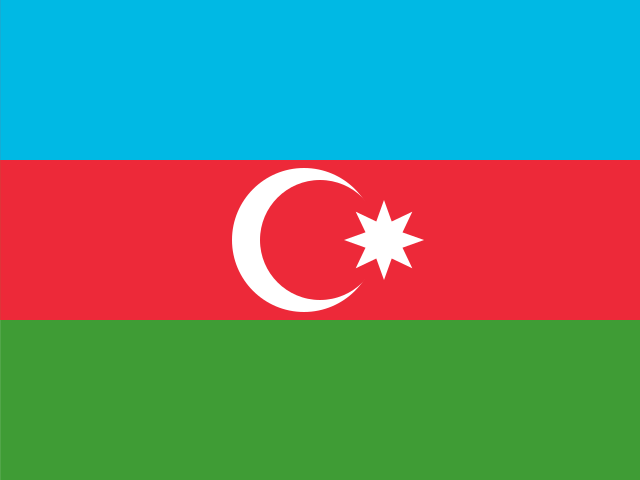
- Description: three equal horizontal bands of sky blue (top), red, and green; a vertical crescent moon and an eight-pointed star in white are centered in the red bandMeaning: the blue band stands for Azerbaijan's Turkic heritage, red for modernization and progress, and green for Islam; the crescent moon and star are a Turkic insignia; the eight star points represent the eight Turkic peoples of the world
- National symbols
- flames of fire
- National colours
- blue, red, green
- National anthem
- Title: "Azerbaijan Marsi" (March of Azerbaijan)Lyrics/music: Ahmed JAVAD/Uzeyir HAJIBEYOVHistory: adopted 1992; originally written in 1919 during a brief period of independence, but did not become the official anthem until after the dissolution of the Soviet Union
- UNESCO World Heritage Sites
- Total World Heritage Sites: 5 (4 cultural, 1 natural)Selected World Heritage Site locales: Walled City of Baku; Gobustan Rock Art Cultural Landscape; Historic Center of Sheki; Cultural Landscape of Khinalig People and "Koc Yolu" Transhumance Route
Economy
- Overview
- upper-middle income, oil-dependent Caucasus economy; minimal economic diversification and dominance of state-owned enterprises; growth and fiscal consolidation supported by oil revenues, but risks remain from demand shocks; potential economic gains from Nagorno-Karabakh ceasefire; education investments to diversify and retain human capital
- GDP (PPP)
- $225.198 billion (2024 est.)
- GDP per person (PPP)
- $22,100 (2024 est.)
- GDP growth
- 4.1% (2024 est.)
- Inflation
- 2.2% (2024 est.)
- Unemployment
- 5.6% (2024 est.)
- Farm products
- milk, wheat, barley, potatoes, tomatoes, watermelons, onions, apples, maize, cotton (2023)
- Industries
- petroleum and petroleum products, natural gas, oilfield equipment; steel, iron ore; cement; chemicals and petrochemicals; textiles
- Exports
- $34.113 billion (2024 est.)
- Main exports
- crude petroleum, natural gas, refined petroleum, plastics, electricity (2023)
- Export partners
- Italy 37%, Turkey 19%, Israel 5%, Greece 4%, Russia 4% (2023)
- Main imports
- cars, crude petroleum, refined petroleum, broadcasting equipment, garments (2023)
- Import partners
- Russia 17%, China 16%, Turkey 14%, Georgia 4%, Germany 4% (2023)
- Money sent home from abroad
- 1.8% of GDP (2024 est.)
Energy, internet and transport
- Electricity access
- Electrification - total population: 100% (2022 est.)
- Electricity sources
- Fossil fuels: 93.5% of total installed capacity (2023 est.)Solar: 0.2% of total installed capacity (2023 est.)Wind: 0.3% of total installed capacity (2023 est.)Hydroelectricity: 5.6% of total installed capacity (2023 est.)Biomass and waste: 0.4% of total installed capacity (2023 est.)
- Internet users
- Percent of population: 89% (2023 est.)
- Mobile phones
- Total subscriptions: 11.3 million (2024 est.)Subscriptions per 100 inhabitants: 110 (2024 est.)
- TV and radio
- TV is the most popular medium; many homes are hooked up to satellite; all Azerbaijan-based channels promote government positions; state-owned AzTV runs three national channels, and state-funded iTV is a national public service broadcaster; 4 national privately-owned stations; Turkish, Russian, and western TV is available on cable; analog terrestrial TV was phased out in 2016-17; radio outlets focus on entertainment, with around a dozen stations on FM in Baku; newspaper distribution is largely limited to Baku (2023)
- Airports
- 32 (2025)
- Railways
- Total: 2,944.3 km (2017)Broad gauge: 2,944.3 km (2017) 1.520-m gauge (approx. 1,767 km electrified)
- Merchant ships
- Total: 312 (2023)By type: general cargo 40, oil tanker 44, other 228
Military and space
- Armed forces
- Azerbaijan Armed Forces: Land Forces, Air Forces, Navy Forces, Special Forces, State Border Service, Coast GuardMinistry of Internal Affairs: Internal Troops, local police forces; Special State Protection Service (SSPS): National Guard (2025)
- Military spending
- 5.1% of GDP (2024 est.)
- Military service
- 18-30 years of age for compulsory military service for men; 18-35 years of age voluntary/contractual service for men (18-40 for women volunteers); 18 months service for conscripts, 36 months for voluntary/contractual service (2025)
- Space programme
- largely focused on the acquisition and operation of satellites; operates foreign-built communications and remote sensing (RS) satellites; cooperates with a variety of foreign space agencies and commercial entities, including those of China, the ESA (bilaterally with individual member states such as France), Israel, Russia, Turkey, and the US; Azercosmos is the largest satellite operator in the Caucasus region (2025)
- Space milestones
- 2013 - first communications satellite (Azerspace-1) built by US company and launched on European rocket2014 - took operational control over remote sensing (RS) satellite (SPOT-7, now Azersky) from a French company (satellite ceased operations in 2023)2017 - second communications satellite (Azerspace-2) built by US company and launched on European rocket2023 - agreed to participate in China's International Lunar Research Station Cooperation project, which aims to establish a base on the Moon in the 2030s; signed agreement with Israel to jointly develop two multi-spectral RS satellites (Azersky-2 program) for scheduled launches in 2026 and 2028 (2025)
Global issues
- Refugees and displaced people
- Refugees: 6,698 (2024 est.)IDPs: 657,996 (2024 est.)Stateless persons: 271 (2024 est.)
Neighbouring countries
ArmeniaGeorgiaIranRussiaTürkiye
- Phone code
- +994
- Internet domain
- .az