Türkiye
Republic of Türkiye
Anatolia hosted the Hittites, Greeks, Romans and Byzantines. The Ottoman Empire, centred on Istanbul, lasted from 1299 to 1922. Atatürk founded a secular republic in 1923.
See Türkiye on the 3D globeTake a quiz
Population86 million
Area783,562 km²
CapitalAnkara
RegionWestern Asia
Did you know?
- Istanbul spans Europe and Asia
- Drinks the most tea per person in the world
- Göbekli Tepe is about 11,500 years old, older than Stonehenge
Key facts about Türkiye
- Government
- Presidential republic
- Religion
- Islam ~90% (mostly Sunni, Alevi minority)
- Founded / independence
- 1923 (republic)
- Rich in
- Textiles, cars, construction, tourism, agriculture, drones
- Languages
- Turkish
Turkish; Kurdish (Kurmanji, Zazaki), Arabic, Laz - Currency
- Turkish lira (₺)
- People are called
- Turkish
- Main cities
- Istanbul, Ankara, Izmir, Bursa, Antalya
Timeline of Türkiye
- 1299Ottoman Empire founded
- 1453Conquers Constantinople
- 1683Siege of Vienna fails
- 1923Republic
- 1952Joins NATO
- 2023Major earthquake
Places to see in Türkiye
- Hagia Sophia
- Blue Mosque
- Cappadocia balloon flights
- Pamukkale
- Ephesus
- Topkapı Palace
Food and drink
Kebab · baklava · Turkish delight · meze · Turkish coffee and tea
Culture and famous for
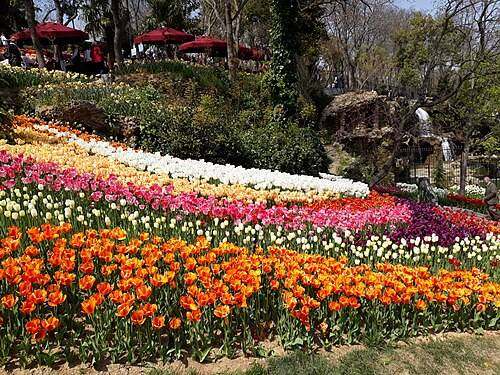
Whirling dervishes; Turkish baths; carpets; tulips came to Europe from here
Popular sports
Football, wrestling, volleyball
Geography and climate
- Highest point
- Mount Ararat, 5,137 m
- Rivers, lakes and seas
- Euphrates, Tigris, Kızılırmak
- Climate
- Mediterranean coast, continental interior
- Coastline
- Has a sea coast
- Population density
- 110 people per km²
Wars and conflicts
- Ottoman wars
- WWI
- War of Independence 1919–23
- Kurdish insurgency 1984–2025 (PKK announced disbandment in 2025)
Alliances and memberships
Military and security
Political unions and regional organisations
EU candidate countriesCouncil of EuropeOrganization of Turkic StatesOrganisation of Islamic Cooperation
Economy and trade
Defence treaties
- Turkey–Azerbaijan Shusha Declaration (2021): Alliance pledging mutual military help — "one nation, two states".
Türkiye in depth
Detailed facts from the CIA World Factbook (public domain, latest edition).
Overview
- History in brief
- Modern Turkey was founded in 1923 from the remnants of the Ottoman Empire by reformer and national hero Mustafa KEMAL, known as Ataturk or "Father of the Turks." One-party rule ended in 1950, and periods of instability and military coups have since fractured the multiparty democracy, in 1960, 1971, 1980, 1997, and 2016. Turkey joined the UN in 1945 and NATO in 1952. In 1963, Turkey became an associate member of the European Community; it began accession talks with the EU in 2005. Turkey intervened militarily on Cyprus in 1974 to prevent a Greek takeover of the island and has since acted as patron state to the "Turkish Republic of Northern Cyprus," which only Turkey recognizes. The Kurdistan Workers' Party (PKK), a US-designated terrorist organization, began a separatist insurgency in Turkey in 1984, and the struggle has long dominated the attention of Turkish security forces. In 2013, the Turkish Government and the PKK conducted negotiations aimed at ending the violence, but intense fighting resumed in 2015. The Turkish Government conducted a referendum in 2017 in which voters approved constitutional amendments changing Turkey from a parliamentary to a presidential system.
Geography
- Location
- Southeastern Europe and Southwestern Asia (that portion of Turkey west of the Bosporus is geographically part of Europe), bordering the Black Sea, between Bulgaria and Georgia, and bordering the Aegean Sea and the Mediterranean Sea, between Greece and Syria
- Size compared
- slightly larger than Texas
- Land borders
- Total: 2,816 kmBorder countries: Armenia 311 km; Azerbaijan 17 km; Bulgaria 223 km; Georgia 273 km; Greece 192 km; Iran 534 km; Iraq 367 km; Syria 899 km
- Coastline
- 7,200 km
- Climate
- temperate; hot, dry summers with mild, wet winters; harsher in interior
- Terrain
- high central plateau (Anatolia); narrow coastal plain; several mountain ranges
- Elevation
- Highest point: Mount Ararat 5,137 mLowest point: Mediterranean Sea 0 mMean elevation: 1,132 m
- Natural resources
- coal, iron ore, copper, chromium, antimony, mercury, gold, barite, borate, celestite (strontium), emery, feldspar, limestone, magnesite, marble, perlite, pumice, pyrites (sulfur), clay, arable land, hydropower
- Major rivers
- Euphrates river source (shared with Syria, Iran, and Iraq [m]) - 3,596 km; Tigris river source (shared with Syria, Iran, and Iraq [m]) - 1,950 kmNote: [s] after country name indicates river source; [m] after country name indicates river mouth
- Major lakes
- Fresh water lake(s): Lake Beysehir - 650 sq km; Lake Egridir - 520 sq kmSalt water lake(s): Lake Van - 3,740 sq km; Lake Tuz - 1,640 sq km;
- Natural hazards
- severe earthquakes, especially in northern Turkey, along an arc extending from the Sea of Marmara to Lake Van; landslides; floodingVolcanism: limited volcanic activity; the three historically active volcanoes (Ararat, Nemrut Dagi, and Tendurek Dagi) have not erupted since the 19th century or earlier
- Notes
- strategic location controlling the Turkish Straits (Bosporus, Sea of Marmara, Dardanelles) that link the Black and Aegean Seas; the 3% of Turkish territory north of the Straits lies in Europe and goes by the names of European Turkey, Eastern Thrace, or Turkish Thrace; the 97% of the country in Asia is referred to as Anatolia; Istanbul, which straddles the Bosporus, is the only metropolis in the world located on two continents; Mount Ararat, reputed to be the landing place of Noah's ark, is in the far-eastern part of the country
- Environmental issues
- water pollution from dumping of chemicals and detergents; air pollution, particularly in urban areas; deforestation; land degradation; conservation of biodiversity
People and society
- Population
- Total: 84,625,585 (2025 est.)Male: 42,489,277Female: 42,136,308
- Nationality
- Noun: Turk(s)Adjective: Turkish
- Ethnic groups
- Turkish 70-75%, Kurdish 19%, other minorities 6-11% (2016 est.)
- Languages
- Turkish (official), Kurdish, other minority languagesMajor-language sample(s): The World Factbook, temel bilgi edinmek için vazgeçilmez bir kaynak. (Turkish)ڕاستییەکانی جیهان، باشترین سەرچاوەیە بۆ زانیارییە بنەڕەتییەکان (Kurdish) The World Factbook, the indispensable source for basic information.
- Religions
- Muslim 99.8% (mostly Sunni), other 0.2% (mostly Christians and Jews)
- Median age
- Total: 34.4 years (2025 est.)Male: 33.4 yearsFemale: 34.6 years
- Population growth
- 0.59% (2025 est.)
- Life expectancy
- Total population: 76.7 years (2024 est.)Male: 74.4 yearsFemale: 79.2 years
- Children per woman
- 1.88 children born/woman (2025 est.)
- Urbanization
- Urban population: 77.5% of total population (2023)Rate of urbanization: 1.11% annual rate of change (2020-25 est.)
- Largest cities
- 15.848 million Istanbul, 5.397 million ANKARA (capital), 3.088 million Izmir, 2.086 million Bursa, 1.836 million Adana, 1.805 million Gaziantep (2023)
- Literacy
- Total population: 97.3% (2021 est.)Male: 99.3% (2021 est.)Female: 95.3% (2021 est.)
- Years in school
- Total: 20 years (2022 est.)Male: 20 years (2022 est.)Female: 20 years (2022 est.)
Government
- Official names
- Conventional long form: Republic of TurkeyConventional short form: TurkeyLocal long form: Turkey CumhuriyetiLocal short form: TurkeyEtymology: the name means "Land of the Turks"
- Government type
- presidential republic
- Capital
- Name: AnkaraGeographic coordinates: 39 56 N, 32 52 ETime difference: UTC+3 (8 hours ahead of Washington, DC, during Standard Time)Etymology: the name probably derives from the Indo-European root word ang, meaning "bend" and relating to the settlement's original location in a winding gorge; the city was referred to as Angora by the 13th century; the name was officially modified to Ankara in 1923 when the Republic of Turkey was founded
- Regions
- 81 provinces (iller, singular - ili); Adana, Adiyaman, Afyonkarahisar, Agri, Aksaray, Amasya, Ankara, Antalya, Ardahan, Artvin, Aydin, Balikesir, Bartin, Batman, Bayburt, Bilecik, Bingol, Bitlis, Bolu, Burdur, Bursa, Canakkale, Cankiri, Corum, Denizli, Diyarbakir, Duzce, Edirne, Elazig, Erzincan, Erzurum, Eskisehir, Gaziantep, Giresun, Gumushane, Hakkari, Hatay, Igdir, Isparta, Istanbul, Izmir (Smyrna), Kahramanmaras, Karabuk, Karaman, Kars, Kastamonu, Kayseri, Kilis, Kirikkale, Kirklareli, Kirsehir, Kocaeli, Konya, Kutahya, Malatya, Manisa, Mardin, Mersin, Mugla, Mus, Nevsehir, Nigde, Ordu, Osmaniye, Rize, Sakarya, Samsun, Sanliurfa, Siirt, Sinop, Sirnak, Sivas, Tekirdag, Tokat, Trabzon (Trebizond), Tunceli, Usak, Van, Yalova, Yozgat, Zonguldak
- Independence
- 29 October 1923 (republic proclaimed, succeeding the Ottoman Empire)
- National holiday
- Republic Day, 29 October (1923)
- Constitution
- History: several previous; latest ratified 9 November 1982Amendment process: proposed by written consent of at least one third of Grand National Assembly (GNA) of Turkey (TBMM) members; adoption of draft amendments requires two debates in plenary TBMM session and three-fifths majority vote of all GNA members; the president of the republic can request TBMM reconsideration of the amendment and, if readopted by two-thirds majority TBMM vote, the president may submit the amendment to a referendum; passage by referendum requires absolute majority vote
- Legal system
- civil law system based on various European systems, notably the Swiss civil code
- Voting age
- 18 years of age; universal
- Flag meaning
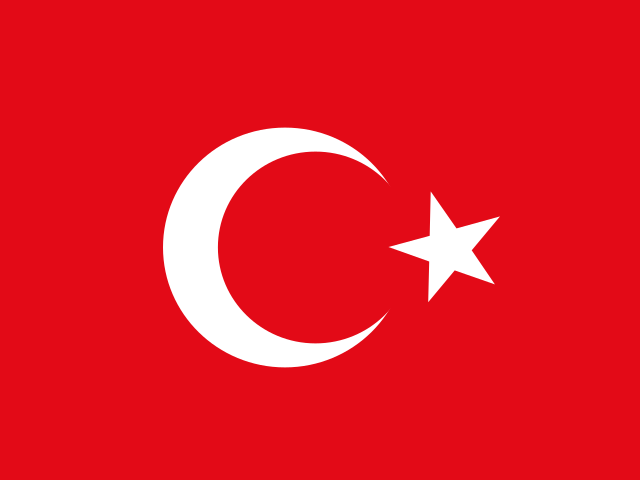
- Description: red with a vertical white crescent moon and five-pointed white star centered just outside the crescent's openingMeaning: the flag colors and designs closely resemble the Ottoman Empire's flag; the crescent moon and star serve as insignia for Turkic peoples; according to one interpretation, the flag represents the reflection of the moon and a star in a pool of blood of Turkish warriors
- National symbols
- vertical crescent moon with adjacent five-pointed star
- National colours
- red, white
- National anthem
- Title: "Istiklal Marsi" (The March of Independence)Lyrics/music: Mehmet Akif ERSOY/Zeki UNGORHistory: lyrics adopted 1921, music adopted 1932; the anthem's original music was adopted in 1924
- UNESCO World Heritage Sites
- Total World Heritage Sites: 22 (20 cultural, 2 mixed)Selected World Heritage Site locales: Archaeological Site of Troy (c); Ephesus (c); Diyarbakır Fortress and Hevsel Gardens Cultural Landscape (c); Hierapolis-Pamukkale (m); Göreme National Park and the Rock Sites of Cappadocia (m); Göbekli Tepe (c); Historic Areas of Istanbul (c); Selimiye Mosque and its Social Complex (c); Neolithic Site of Çatalhöyük (c); Bursa and Cumalıkızık: the Birth of the Ottoman Empire (c); Gordion (c); Great Mosque and Hospital of Divriği (c); Hattusha: the Hittite Capital (c); Nemrut Dağ (c); Xanthos-Letoon (c); City of Safranbolu (c); Pergamon and its Multi-Layered Cultural Landscape (c); Archaeological Site of Ani (c); Aphrodisias (c); Arslantepe Mound (c); Wooden Hypostyle Mosques of Medieval Anatolia (c); Turkmenistan (c); Sardis and the Lydian Tumuli of Bin Tepe (c)
Economy
- Overview
- upper-middle-income, diversified Middle Eastern economy; industrializing economy that maintains large agricultural base; key energy, tourism, and construction sectors; high inflation, interest rates, and foreign debt pose risk to financial stability
- GDP (PPP)
- $3.018 trillion (2024 est.)
- GDP per person (PPP)
- $35,300 (2024 est.)
- GDP growth
- 3.2% (2024 est.)
- Inflation
- 58.5% (2024 est.)
- Unemployment
- 8.5% (2024 est.)
- Below poverty line
- 13.9% (2022 est.)
- Farm products
- sugar beets, wheat, milk, tomatoes, barley, maize, potatoes, apples, grapes, watermelons (2023)
- Industries
- textiles, food processing, automobiles, electronics, mining (coal, chromate, copper, boron), steel, petroleum, construction, lumber, paper
- Exports
- $372.756 billion (2024 est.)
- Main exports
- garments, cars, gold, refined petroleum, vehicle parts/accessories (2023)
- Export partners
- Germany 9%, USA 6%, UK 6%, UAE 5%, Iraq 5% (2023)
- Main imports
- gold, refined petroleum, cars, plastics, natural gas (2023)
- Import partners
- China 13%, Russia 9%, Germany 9%, Switzerland 6%, USA 5% (2023)
- Money sent home from abroad
- 0.1% of GDP (2024 est.)
Energy, internet and transport
- Electricity access
- Electrification - total population: 100% (2022 est.)
- Electricity sources
- Fossil fuels: 57.1% of total installed capacity (2023 est.)Solar: 6.7% of total installed capacity (2023 est.)Wind: 10.9% of total installed capacity (2023 est.)Hydroelectricity: 19.9% of total installed capacity (2023 est.)Geothermal: 2.8% of total installed capacity (2023 est.)Biomass and waste: 2.6% of total installed capacity (2023 est.)
- Internet users
- Percent of population: 87% (2024 est.)
- Mobile phones
- Total subscriptions: 94.3 million (2024 est.)Subscriptions per 100 inhabitants: 108 (2024 est.)
- TV and radio
- Turkish Radio and Television Corporation (TRT) operates multiple TV and radio networks and stations; multiple privately owned national TV stations and 567 private regional and local TV stations; multi-channel cable TV available; 1,007 private radio stations (2019)
- Airports
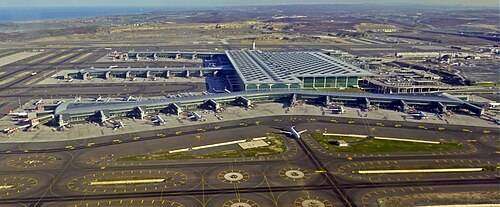
- 116 (2025)
- Railways
- Total: 11,497 km (2018)Standard gauge: 11,497 km (2018) 1.435-m gauge (1.435 km high speed train)
- Merchant ships
- Total: 1,170 (2023)By type: bulk carrier 43, container ship 43, general cargo 223, oil tanker 134, other 727
Military and space
- Armed forces
- Turkish Armed Forces (TAF; Türk Silahlı Kuvvetleri, TSK): Turkish Land Forces (Türk Kara Kuvvetleri), Turkish Naval Forces (Türk Deniz Kuvvetleri; includes naval air and naval infantry), Turkish Air Forces (Türk Hava Kuvvetleri)Ministry of Interior: Gendarmerie General Command (aka Gendarmerie of the Turkish Republic), Turkish Coast Guard Command, General Directorate of Security (National Police) (2025)
- Military spending
- 2.3% of GDP (2025 est.)
- Military service
- military service is compulsory for Turkish men 20-41 for a period of 6-12 months; men and women may volunteer (2025)
- Space programme
- has an ambitious national space program with a focus on satellites, satellite components, satellite launch capabilities, software development, ground station technologies, and building up the country’s space industries; manufactures and operates remote sensing and telecommunications satellites; in recent years has initiated a satellite/space launch vehicle (SLV) program with the goal of independently placing satellites into orbit and a probe on the Moon; works with more than 25 foreign space agencies and corporations, including those of Azerbaijan, China, France, India, Japan, Kazakhstan, Pakistan, Russia, South Korea, Ukraine, and the US, as well as the ESA; has state-owned rocket and satellite development companies, including some under the Ministry of Defense; has a growing private space-industry sector, and the Turkish Government has pledged to increase the country's share of the global space market (2025)
- Space milestones
- 1994 - first commercial communications satellite built jointly with and launched by France2003 - first domestically built experimental remote sensing (RS) satellite (BILSAT) launched by Russia2018 - launched first domestically produced solid-fuel sounding rocket to an altitude of 135 km (84 mi)2024 - first Turkish astronaut in space on the International Space Station; first domestically produced communications satellite launched by US2025 - successfully launched 2-stage hybrid rocket more than 200 km (124 mi) in altitude
Global issues
- Refugees and displaced people
- Refugees: 3,094,818 (2024 est.)IDPs: 538,105 (2024 est.)Stateless persons: 420 (2024 est.)
Neighbouring countries
ArmeniaAzerbaijanBulgariaGeorgiaGreeceIranIraqSyria
- Phone code
- +90
- Internet domain
- .tr