Switzerland
Swiss Confederation · Suisse · Schweiz · Svizzera
Founded by three cantons in 1291, it became a confederation of 26 cantons. Neutral since 1815; hosts the Red Cross and many UN agencies. Citizens vote in referendums several times a year.
See Switzerland on the 3D globeTake a quiz
Population9 million
Area41,284 km²
CapitalBern
RegionWestern Europe
Did you know?
- Has four national languages
- Bunkers could shelter its whole population
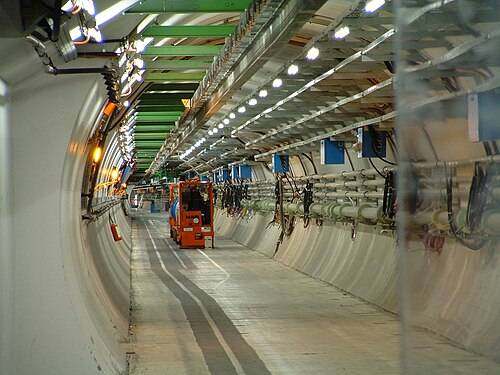
- CERN's particle accelerator runs under its border
Key facts about Switzerland
- Government
- Federal directorial republic with direct democracy
- Religion
- Catholic ~32%, Protestant ~21%, unaffiliated ~33%
- Founded / independence
- 1291 confederation
- Rich in
- Banking, pharmaceuticals, watches, chocolate, tourism
- Languages
- French, Swiss German, Italian, Romansh
German (Swiss German dialects), French, Italian, Romansh - Currency
- Swiss franc (Fr.)
- People are called
- Swiss
- Main cities
- Zürich, Geneva, Basel, Lausanne, Bern
Timeline of Switzerland
- 1291Confederation founded
- 1515Neutrality begins
- 1815Neutrality recognised
- 1848Federal state
- 1971Women's federal vote
- 2002Joins UN
Places to see in Switzerland
- Matterhorn
- Jungfraujoch
- Lake Geneva
- Chillon Castle
- Lucerne's Chapel Bridge
- Rhine Falls
Food and drink
Fondue · raclette · rösti · Swiss chocolate
Culture and famous for
Watches; Swiss Army knife; Red Cross; direct democracy
Popular sports
Skiing, tennis (Federer), football
Geography and climate
- Highest point
- Dufourspitze, 4,634 m
- Rivers, lakes and seas
- Rhine, Rhône; Lake Geneva
- Climate
- Alpine
- Coastline
- Landlocked
- Population density
- 218 people per km²
Wars and conflicts
- Swabian War
- Battle of Marignano 1515
- Sonderbund War 1847
- neutral since 1815
Alliances and memberships
Political unions and regional organisations
Economy and trade
Switzerland in depth
Detailed facts from the CIA World Factbook (public domain, latest edition).
Overview
- History in brief
- The Swiss Confederation was founded in 1291 as a defensive alliance among three cantons. In succeeding years, other localities joined the original three. The Swiss Confederation secured its independence from the Holy Roman Empire in 1499. A constitution of 1848, which was modified in 1874 to allow voters to introduce referenda on proposed laws, replaced the confederation with a centralized federal government. The major European powers have long honored Switzerland's sovereignty and neutrality, and the country was not involved in either World War. The political and economic integration of Europe over the past half-century, as well as Switzerland's role in many UN and international organizations, has strengthened Switzerland's ties with its neighbors. However, the country did not officially become a UN member until 2002. Switzerland remains active in many UN and international organizations but retains a strong commitment to neutrality.
Geography
- Location
- Central Europe, east of France, north of Italy
- Size compared
- slightly less than twice the size of New Jersey
- Land borders
- Total: 1,770 kmBorder countries: Austria 158 km; France 525 km; Italy 698 km; Liechtenstein 41 km; Germany 348 km
- Coastline
- 0 km (landlocked)
- Climate
- temperate, but varies with altitude; cold, cloudy, rainy/snowy winters; cool to warm, cloudy, humid summers with occasional showers
- Terrain
- mostly mountains (Alps in south, Jura in northwest) with a central plateau of rolling hills, plains, and large lakes
- Elevation
- Highest point: Dufourspitze on Monte Rosa 4,634 mLowest point: Lake Maggiore 195 mMean elevation: 1,350 m
- Natural resources
- hydropower potential, timber, salt
- Major rivers
- Rhein (Rhine) river source (shared with Germany, France, and Netherlands [m]) - 1,233 kmNote: [s] after country name indicates river source; [m] after country name indicates river mouth
- Major lakes
- Fresh water lake(s): Lake Constance (shared with Germany and Austria) - 540 sq km; Lake Geneva (shared with France) - 580 sq km
- Natural hazards
- avalanches, landslides; flash floods
- Notes
- landlocked; crossroads of northern and southern Europe; along with southeastern France, northern Italy, and southwestern Austria, has the highest elevations in the Alps
- Environmental issues
- air pollution from vehicle emissions; water pollution from agricultural fertilizers; soil pollution from chemical contaminants; soil erosion; loss of biodiversity
People and society
- Population
- Total: 8,925,741 (2025 est.)Male: 4,436,858Female: 4,488,883
- Nationality
- Noun: Swiss (singular and plural)Adjective: Swiss
- Ethnic groups
- Swiss 69.2%, German 4.2%, Italian 3.2%, Portuguese 2.5%, French 2.1%, Kosovan 1.1%, Turkish 1%, other 16.7% (2020 est.)
- Languages
- German (or Swiss German) (official) 62.1%, French (official) 22.8%, Italian (official) 8%, English 5.7%, Portuguese 3.5%, Albanian 3.3%, Serbo-Croatian 2.3%, Spanish 2.3%, Romansh (official) 0.5%, other 7.9% (2019 est.)Major-language sample(s): Das World Factbook, die unverzichtbare Quelle für grundlegende Informationen. (German)The World Factbook, une source indispensable d'informations de base. (French)L'Almanacco dei fatti del mondo, l'indispensabile fonte per le informazioni di base. (Italian)The World Factbook, the indispensable source for basic information.
- Religions
- Roman Catholic 34.4%, Protestant 22.5%, other Christian 5.7%, Muslim 5.4%, other 1.5%, none 29.4%, unspecified 1.1% (2020 est.)
- Median age
- Total: 44.4 years (2025 est.)Male: 43.5 yearsFemale: 44.9 years
- Population growth
- 0.72% (2025 est.)
- Life expectancy
- Total population: 83.9 years (2024 est.)Male: 82 yearsFemale: 85.8 years
- Children per woman
- 1.59 children born/woman (2025 est.)
- Urbanization
- Urban population: 74.2% of total population (2023)Rate of urbanization: 0.79% annual rate of change (2020-25 est.)
- Largest cities
- 1.432 million Zurich, 441,000 BERN (capital) (2023)
- Years in school
- Total: 17 years (2023 est.)Male: 17 years (2023 est.)Female: 17 years (2023 est.)
Government
- Official names
- Conventional long form: Swiss ConfederationConventional short form: SwitzerlandLocal long form: Schweizerische Eidgenossenschaft (German)/ Confederation Suisse (French)/ Confederazione Svizzera (Italian)/ Confederaziun Svizra (Romansh)Local short form: Schweiz (German)/ Suisse (French)/ Svizzera (Italian)/ Svizra (Romansh)Abbreviation: CHEtymology: name derives from the canton of Schwyz, one of the founding cantons of the Swiss Confederacy formed in the late 13th century
- Government type
- federal republic (formally a confederation)
- Capital
- Name: BernGeographic coordinates: 46 55 N, 7 28 ETime difference: UTC+1 (6 hours ahead of Washington, DC, during Standard Time)Daylight saving time: +1hr, begins last Sunday in March; ends last Sunday in OctoberEtymology: the origin of the name is uncertain; it is sometimes associated with the German word Baer (bear), but a more likely origin is an Indo-European root word ber, meaning "marshy place"
- Regions
- 26 cantons (cantons, singular - canton in French; cantoni, singular - cantone in Italian; Kantone, singular - Kanton in German); Aargau, Appenzell Ausserrhoden, Appenzell Innerrhoden, Basel-Landschaft, Basel-Stadt, Berne/Bern, Fribourg/Freiburg, Genève (Geneva), Glarus, Graubuenden/Grigioni/Grischun, Jura, Luzern (Lucerne), Neuchatel, Nidwalden, Obwalden, Sankt Gallen, Schaffhausen, Schwyz, Solothurn, Thurgau, Ticino, Uri, Valais/Wallis, Vaud, Zug, Zuerich
- Independence
- 1 August 1291 (founding of the Swiss Confederation)
- National holiday
- Founding of the Swiss Confederation in 1291
- Constitution
- History: previous 1848, 1874; latest adopted by referendum 18 April 1999, effective 1 January 2000Amendment process: proposed by the two houses of the Federal Assembly or by petition of at least one hundred thousand voters (called the "federal popular initiative"); passage of proposals requires majority vote in a referendum; following drafting of an amendment by the Assembly, its passage requires approval by majority vote in a referendum and approval by the majority of cantons
- Legal system
- civil law system; judicial review of legislative acts, except federal decrees of a general obligatory character
- Voting age
- 18 years of age; universal
- Flag meaning
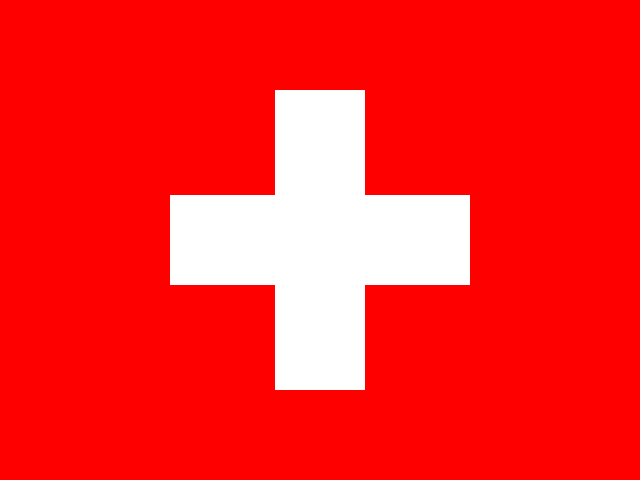
- Description: red square with an equal-armed white cross in the center that does not extend to the edges of the flagHistory: the origin of the flag is unclear, but a white cross was used to identify Swiss Confederation troops at the Battle of Laupen (1339)
- National symbols
- Swiss cross (white cross on red field)
- National colours
- red, white
- National anthem
- Title: the Swiss anthem has four names: "Schweizerpsalm" [German] "Cantique Suisse" [French] "Salmo svizzero," [Italian] "Psalm svizzer" [Romansch] (Swiss Psalm)Lyrics/music: Leonhard WIDMER [German], Charles CHATELANAT [French], Camillo VALSANGIACOMO [Italian], and Flurin CAMATHIAS [Romansch]/Alberik ZWYSSIGHistory: adopted 1981; all four of the versions (German, French, Italian, Romansch) are considered official
- UNESCO World Heritage Sites
- Total World Heritage Sites: 13 (9 cultural, 4 natural)Selected World Heritage Site locales: Old City of Berne (c); Swiss Alps Jungfrau-Aletsch (n); Monte San Giorgio (n); Abbey of St Gall (c); Three Castles, Defensive Wall, and Ramparts of the Market-Town of Bellinzona (c); Rhaetian Railway in the Albula/Bernina Landscapes (c); La Chaux-de-Fonds/Le Locle, Watchmaking Town Planning (c); Prehistoric Pile Dwellings around the Alps (c); Benedictine Convent of St John at Müstair (c); Lavaux, Vineyard Terraces (c)
Economy
- Overview
- high-income, non-EU European economy; top ten in GDP per capita; renowned banking and financial hub; low unemployment and inflation; slowed GDP growth post-pandemic; highly skilled but aging workforce; key pharmaceutical and precision manufacturing exporter; leader in innovation and competitiveness indices
- GDP (PPP)
- $741.035 billion (2024 est.)
- GDP per person (PPP)
- $82,000 (2024 est.)
- GDP growth
- 1.3% (2024 est.)
- Inflation
- 1.1% (2024 est.)
- Unemployment
- 4.2% (2024 est.)
- Below poverty line
- 15.8% (2021 est.)
- Farm products
- milk, sugar beets, wheat, potatoes, pork, apples, barley, beef, maize, grapes (2023)
- Industries
- machinery, chemicals, watches, textiles, precision instruments, tourism, banking, insurance, pharmaceuticals
- Exports
- $675.059 billion (2024 est.)
- Main exports
- gold, packaged medicine, vaccines, nitrogen compounds, base metal watches (2023)
- Export partners
- Germany 14%, China 12%, USA 11%, Italy 5%, Turkey 5% (2023)
- Main imports
- gold, packaged medicine, vaccines, cars, jewelry (2023)
- Import partners
- Germany 17%, USA 9%, Italy 8%, France 6%, China 5% (2023)
- Money sent home from abroad
- 0.4% of GDP (2024 est.)
Energy, internet and transport
- Electricity access
- Electrification - total population: 100% (2022 est.)
- Electricity sources
- Fossil fuels: 0.6% of total installed capacity (2023 est.)Nuclear: 34.9% of total installed capacity (2023 est.)Solar: 6.6% of total installed capacity (2023 est.)Wind: 0.3% of total installed capacity (2023 est.)Hydroelectricity: 53% of total installed capacity (2023 est.)Biomass and waste: 4.7% of total installed capacity (2023 est.)
- Internet users
- Percent of population: 97% (2023 est.)
- Mobile phones
- Total subscriptions: 11.6 million (2024 est.)Subscriptions per 100 inhabitants: 129 (2024 est.)
- TV and radio
- publicly owned Swiss Broadcasting Corporation (SRG/SSR) has 8 national TV networks, 3 broadcasting in German, 3 in French, and 2 in Italian; private commercial TV stations broadcast regionally and locally; German, Italian, and French TV broadcasts widely available via multi-channel cable and satellite TV; SRG/SSR has 17 radio stations (2019)
- Airports
- 66 (2025)
- Railways
- Total: 5,296 km (2020) 5,296 km electrified; Switzerland remains the only country with a fully electrified network
- Merchant ships
- Total: 17 (2023)By type: bulk carrier 14, general cargo 1, other 2 (includes Liechtenstein)
Military and space
- Armed forces
- Swiss Armed Forces (aka Swiss Army or Schweizer Armee); Army (aka Land Forces), Swiss Air Force (2025)
- Military spending
- 0.7% of GDP (2024 est.)
- Military service
- every Swiss man 18-30 is obligated to serve in the military or the alternative civilian service; women can serve on a voluntary basis; required military service is 245 days, including 18-21 weeks of basic training generally between the ages of 19-25, followed by six three-week recalls for refresher training over the following nine years; the system offers opportunities for conscripts to train as non-commissioned and commissioned officers in the militia with longer service commitments (2026)
Global issues
- Refugees and displaced people
- Refugees: 213,177 (2024 est.)IDPs: 97 (2024 est.)Stateless persons: 1,267 (2024 est.)
Neighbouring countries
AustriaFranceItalyLiechtensteinGermany
- Phone code
- +41
- Internet domain
- .ch