Ukraine
Ukraine · Україна
Kyiv was the heart of medieval Kievan Rus. Later ruled by Lithuania, Poland and Russia; the Cossack Hetmanate was a brief state. Independent since 1991, it has been fighting Russia's full-scale invasion since February 2022; talks in Abu Dhabi in November 2026 produced no deal.
See Ukraine on the 3D globeTake a quiz
Ongoing: Russia–Ukraine war
Did you know?
- Largest country entirely within Europe
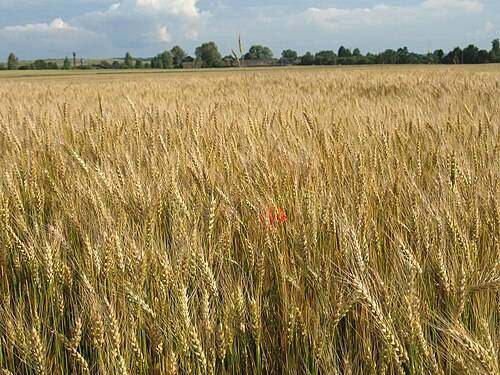
- Holds about a quarter of the world's richest black soil
- The world's largest cargo plane, the Mriya, was built here
Key facts about Ukraine
- Government
- Semi-presidential republic (under martial law)
- Religion
- Orthodox ~70%, Greek Catholic ~9%
- Founded / independence
- 1991 (from USSR)
- Rich in
- Black-soil farmland (grain, sunflower oil), iron ore, steel, IT
- Languages
- Ukrainian
Ukrainian (with Surzhyk mixed speech); Russian widely spoken; Crimean Tatar, Hungarian - Currency
- Ukrainian hryvnia (₴)
- People are called
- Ukrainian
- Main cities
- Kyiv, Kharkiv, Odesa, Dnipro, Lviv, Zaporizhzhia
Timeline of Ukraine
- 988Kyiv adopts Christianity
- 1240Mongols destroy Kyiv
- 1648Cossack Hetmanate
- 1932Holodomor famine
- 1986Chernobyl disaster
- 1991Independence
- 2014Crimea annexed
- 2022Full-scale Russian invasion
Places to see in Ukraine
- Kyiv Pechersk Lavra
- St Sophia Cathedral
- Lviv old town
- Carpathian Mountains
- Odesa Opera House
Food and drink
Borscht (UNESCO-listed) · varenyky · salo · chicken Kyiv
Culture and famous for
Pysanky painted eggs; embroidered vyshyvanka shirts; writer Shevchenko
Popular sports
Football, boxing (Klitschko, Usyk)
Geography and climate
- Highest point
- Hoverla, 2,061 m
- Rivers, lakes and seas
- Dnieper, Dniester, Southern Bug; Black Sea
- Climate
- Continental
- Coastline
- Has a sea coast
- Population density
- 61 people per km²
Wars and conflicts
- Holodomor famine 1932–33
- WWII
- 2014 Crimea annexation and Donbas war
- Russian full-scale invasion 2022–present
Empires and states that once stood here
Scythia c. 700–200 BCKhazar Khaganate c. 650–969Kievan Rus 882–1240Soviet Union (USSR) 1922–1991
Alliances and memberships
Political unions and regional organisations
EU candidate countriesCouncil of Europe
Ukraine in depth
Detailed facts from the CIA World Factbook (public domain, latest edition).
Overview
- History in brief
- Ukraine was the center of the first eastern Slavic state, Kyivan Rus, which was the largest and most powerful state in Europe during the 10th and 11th centuries. Weakened by internecine quarrels and Mongol invasions, Kyivan Rus was incorporated into the Grand Duchy of Lithuania and eventually into the Polish-Lithuanian Commonwealth. The cultural and religious legacy of Kyivan Rus laid the foundation for Ukrainian nationalism. A new Ukrainian state, the Cossack Hetmanate, was established during the mid-17th century after an uprising against the Poles. Despite continuous Muscovite pressure, the Hetmanate managed to remain autonomous for well over 100 years. During the latter part of the 18th century, the Russian Empire absorbed most Ukrainian territory. After czarist Russia collapsed in 1917, Ukraine -- which has long been known as the region's "bread basket" for its agricultural production -- achieved a short-lived period of independence (1917-20), but the country was reconquered and endured a Soviet rule that engineered two famines (1921-22 and 1932-33) in which over eight million died. In World War II, German and Soviet armies were responsible for seven to eight million more deaths. In 1986, a sudden power surge during a reactor-systems test at Ukraine's Chernobyl power station triggered the worst nuclear disaster in history, releasing massive amounts of radioactive material. Although Ukraine overwhelmingly voted for independence in 1991 as the Union of Soviet Socialist Republics (USSR) dissolved, democracy and prosperity remained elusive, with the legacy of state control, patronage politics, and endemic corruption stalling efforts at economic reform, privatization, and civil liberties. In 2004 and 2005, a mass protest dubbed the "Orange Revolution" forced the authorities to overturn a presidential election and allow a new internationally monitored vote that swept into power a reformist slate under Viktor YUSHCHENKO. Rival Viktor YANUKOVYCH became prime minister in 2006 and was elected president in 2010. In 2012, Ukraine held legislative elections that Western observers widely criticized as corrupt. In 2013, YANUKOVYCH backtracked on a trade and cooperation agreement with the EU -- in favor of closer economic ties with Russia -- and then used force against protestors who supported the agreement, leading to a three-month protestor occupation of Kyiv's central square. The government's use of violence to break up the protest camp in 2014 led to multiple deat
Geography
- Location
- Eastern Europe, bordering the Black Sea, between Poland, Belarus, Romania, and Moldova in the west and Russia in the east
- Size compared
- almost four times the size of Georgia; slightly smaller than Texas
- Land borders
- Total: 5,581 kmBorder countries: Belarus 1,111 km; Hungary 128 km; Moldova 1,202 km; Poland 498 km; Romania 601 km; Russia 1,944 km, Slovakia 97 km
- Coastline
- 2,782 km
- Climate
- temperate continental; Mediterranean only on the southern Crimean coast; precipitation disproportionately distributed, highest in west and north, lesser in east and southeast; winters vary from cool along the Black Sea to cold farther inland; warm summers across the greater part of the country, hot in the south
- Terrain
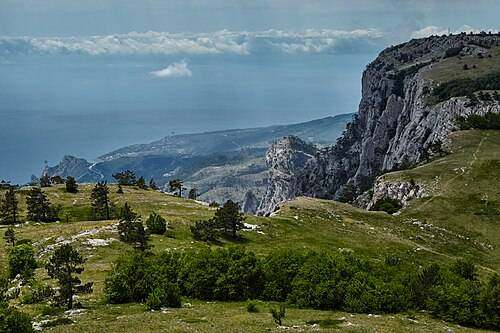
- mostly fertile plains (steppes) and plateaus, with mountains found only in the west (the Carpathians) or in the extreme south of the Crimean Peninsula
- Elevation
- Highest point: Hora Hoverla 2,061 mLowest point: Black Sea 0 mMean elevation: 175 m
- Natural resources
- iron ore, coal, manganese, natural gas, oil, salt, sulfur, graphite, titanium, magnesium, kaolin, nickel, mercury, timber, arable land
- Major rivers
- Dunay (Danube) (shared with Germany [s], Austria, Slovakia, Hungary, Croatia, Serbia, Bulgaria, Moldova, and Romania [m]) - 2,888 km; Dnipro (Dnieper) river mouth (shared with Russia [s] and Belarus) - 2,287 km; Dnister (Dniester) river source and mouth (shared with Moldova) - 1,411 km; Vistula (shared with Poland [s/m] and Belarus) - 1,213 kmNote: [s] after country name indicates river source; [m] after country name indicates river mouth
- Natural hazards
- occasional floods; occasional droughts
- Notes
- strategic position at the crossroads between Europe and Asia; second-largest country in Europe after Russia
- Environmental issues
- air and water pollution; land degradation; solid waste management; biodiversity loss; deforestation; radiation contamination in the northeast from 1986 nuclear accident in Chornobyl'
People and society
- Population
- Total: 35,661,826 (2024 est.)Male: 17,510,149Female: 18,151,677
- Nationality
- Noun: Ukrainian(s)Adjective: Ukrainian
- Ethnic groups
- Ukrainian 77.8%, Russian 17.3%, Belarusian 0.6%, Moldovan 0.5%, Crimean Tatar 0.5%, Bulgarian 0.4%, Hungarian 0.3%, Romanian 0.3%, Polish 0.3%, Jewish 0.2%, other 1.8% (2001 est.)
- Languages
- Ukrainian (official) 67.5%, Russian (regional language) 29.6%, other (includes Crimean Tatar, Moldovan/Romanian, and Hungarian) 2.9% (2001 est.)Major-language sample(s): Свiтова Книга Фактiв – найкраще джерело базової інформації. (Ukrainian)The World Factbook, the indispensable source for basic information.
- Religions
- Orthodox (includes the Orthodox Church of Ukraine (OCU), Ukrainian Autocephalous Orthodox Church (UAOC), and the Ukrainian Orthodox - Moscow Patriarchate (UOC-MP)), Ukrainian Greek Catholic, Roman Catholic, Protestant, Muslim, Jewish (2013 est.)
- Median age
- Total: 44.6 years (2025 est.)Male: 41.4 yearsFemale: 49.2 years
- Population growth
- 2.42% (2025 est.)
- Life expectancy
- Total population: 70.5 years (2024 est.)Male: 65.4 yearsFemale: 75.8 years
- Children per woman
- 1.22 children born/woman (2025 est.)
- Urbanization
- Urban population: 70.1% of total population (2023)Rate of urbanization: -0.27% annual rate of change (2020-25 est.)
- Largest cities
- 3.017 million KYIV (capital), 1.421 million Kharkiv, 1.008 million Odesa, 942,000 Dnipropetrovsk, 888,000 Donetsk (2023)
- Literacy
- Total population: 100%Male: 100%Female: 100% (2021)
- Years in school
- Total: 13 years (2021 est.)Male: 13 years (2021 est.)Female: 14 years (2021 est.)
Government
- Official names
- Conventional long form: noneConventional short form: UkraineLocal long form: noneLocal short form: UkrainaFormer: Ukrainian National Republic, Ukrainian State, Ukrainian Soviet Socialist RepublicEtymology: the name derives from the Old East Slavic or Old Russian word ukraina, meaning "borderland," which was used to describe the area on medieval Russia's border at the time of the Tatar invasion in the 13th century
- Government type
- semi-presidential republic
- Capital
- Name: Kyiv (Kiev is the transliteration from Russian)Geographic coordinates: 50 26 N, 30 31 ETime difference: UTC+2 (7 hours ahead of Washington, DC, during Standard Time)Daylight saving time: +1hr, begins last Sunday in March; ends last Sunday in OctoberEtymology: the origin of the name is unclear; traditionally, the name comes from a Prince Kiy, who is said to have founded the city in the 9th century
- Regions
- 24 provinces (oblasti, singular - oblast'), 1 autonomous republic* (avtonomna respublika), and 2 municipalities** (mista, singular - misto) with oblast status; Cherkasy, Chernihiv, Chernivtsi, Crimea or Avtonomna Respublika Krym* (Simferopol), Dnipropetrovsk (Dnipro), Donetsk, Ivano-Frankivsk, Kharkiv, Kherson, Khmelnytskyi, Kirovohrad (Kropyvnytskyi), Kyiv**, Kyiv, Luhansk, Lviv, Mykolaiv, Odesa, Poltava, Rivne, Sevastopol**, Sumy, Ternopil, Vinnytsia, Volyn (Lutsk), Zakarpattia (Uzhhorod), Zaporizhzhia, Zhytomyr
- Independence
- 24 August 1991 (from the Soviet Union); notable earlier dates: ca. 982 (VOLODYMYR I consolidates Kyivan Rus); 1199 (Principality (later Kingdom) of Ruthenia formed); 1648 (establishment of the Cossack Hetmanate); 22 January 1918 (from Soviet Russia)
- National holiday
- Independence Day, 24 August (1991)
- Constitution
- History: several previous; latest adopted and ratified 28 June 1996Amendment process: proposed by the president of Ukraine or by at least one third of the Supreme Council members; adoption requires simple majority vote by the Council and at least two-thirds majority vote in its next regular session; adoption of proposals relating to general constitutional principles, elections, and amendment procedures requires two-thirds majority vote by the Council and approval in a referendum; constitutional articles on personal rights and freedoms, national independence, and territorial integrity cannot be amended
- Legal system
- civil law system; judicial review of legislative acts
- Voting age
- 18 years of age; universal
- Flag meaning
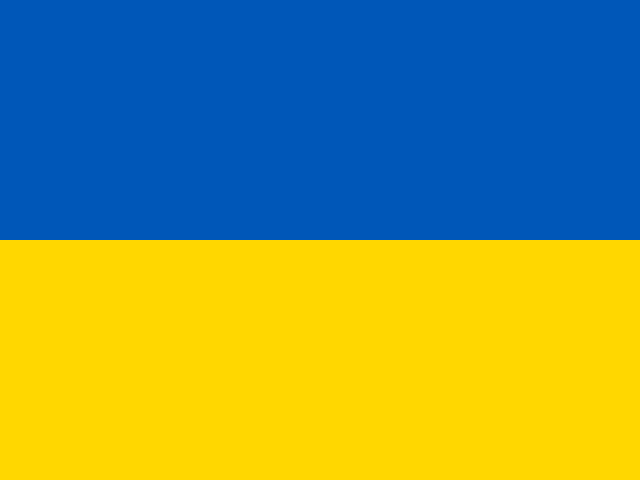
- Description: two equal horizontal bands of blue (top) and yellowMeaning: the colors date back to medieval heraldry, but they are sometimes said to represent grain fields under a blue sky
- National symbols
- tryzub (trident), sunflower
- National colours
- blue, yellow
- National anthem
- Title: "Shche ne vmerla Ukraina" (Ukraine Has Not Yet Perished)Lyrics/music: Paul CHUBYNSKYI/Mikhail VERBYTSKYIHistory: music adopted 1991, lyrics adopted 2003; current version of the anthem is the first verse of CHUBYNSKYI's poem, plus the chorus
- UNESCO World Heritage Sites
- Total World Heritage Sites: 8 (7 cultural, 1 natural)Selected World Heritage Site locales: Kyiv: Saint Sophia Cathedral and Related Monastic Buildings, Kyiv Pechersk Lavra (c); Lviv Historic Center (c); Residence of Bukovinian and Dalmatian Metropolitans, Chernivtsi (c); Ancient City of Tauric Chersonese, Sevastopol (c); Wooden Tserkvas of the Carpathian Region (c); Ancient and Primeval Beech Forests of the Carpathians (n); Struve Geodetic Arc (c); The Historic Centre of Odesa (c)
Economy
- Overview
- lower-middle-income, non-EU, Eastern European economy; key wheat and corn exporter; gradual recovery after 30% GDP contraction at start of war; damage to infrastructure and agriculture balanced by consumer and business resilience in western Ukraine; international aid has stabilized foreign exchange reserves, allowing managed currency float; continued progress on anti-corruption reforms
- GDP (PPP)
- $577.583 billion (2024 est.)
- GDP per person (PPP)
- $16,300 (2024 est.)
- GDP growth
- 2.9% (2024 est.)
- Inflation
- 6.5% (2024 est.)
- Unemployment
- 9.9% (2021 est.)
- Below poverty line
- 1.6% (2020 est.)
- Farm products
- maize, wheat, potatoes, sugar beets, sunflower seeds, milk, barley, soybeans, rapeseed, tomatoes (2023)
- Industries
- industrial machinery, ferrous and nonferrous metals, automotive and aircraft components, electronics, chemicals, textiles, mining, construction
- Exports
- $56.114 billion (2024 est.)
- Main exports
- corn, seed oils, wheat, iron ore, soybeans (2023)
- Export partners
- Poland 12%, Romania 9%, Turkey 7%, China 6%, Spain 6% (2023)
- Main imports
- refined petroleum, cars, natural gas, packaged medicine, plastic products (2023)
- Import partners
- China 16%, Poland 14%, Germany 8%, Turkey 6%, USA 4% (2023)
- Money sent home from abroad
- 6.3% of GDP (2024 est.)
Energy, internet and transport
- Electricity access
- Electrification - total population: 100% (2022 est.)
- Electricity sources
- Fossil fuels: 32.9% of total installed capacity (2023 est.)Nuclear: 50.6% of total installed capacity (2023 est.)Solar: 4.5% of total installed capacity (2023 est.)Wind: 1% of total installed capacity (2023 est.)Hydroelectricity: 9.9% of total installed capacity (2023 est.)Biomass and waste: 1% of total installed capacity (2023 est.)
- Internet users
- Percent of population: 82% (2023 est.)
- Mobile phones
- Total subscriptions: 50.3 million (2023 est.)Subscriptions per 100 inhabitants: 135 (2021 est.)
- TV and radio
- media landscape dominated by oligarch-owned news outlets; United News created for 24-hour news about the war with Russia, a joint effort from the Ukrainian public broadcaster and top commercial TV channels; Ukraine Radio's Suspilne and privately owned Radio NV are the national talk radio networks (2021)
- Airports
- 152 (2025)
- Railways
- Total: 21,733 km (2014)Standard gauge: 49 km (2014) 1.435-m gauge (49 km electrified)Broad gauge: 21,684 km (2014) 1.524-m gauge (9,250 km electrified)
- Merchant ships
- Total: 410 (2023)By type: container ship 1, general cargo 83, oil tanker 14, other 312
Military and space
- Armed forces
- Armed Forces of Ukraine (AFU; Zbroyni Syly Ukrayiny or ZSU): Ground Forces, Naval Forces, Air Forces, Air Assault Forces, Marine Corps, Special Operations Forces, Unmanned Systems Forces, Territorial Defense Forces (Reserves)Ministry of Internal Affairs: National Guard of Ukraine, State Border Guard Service of Ukraine (includes Maritime Border Guard or Sea Guard), National Police of Ukraine (2025)
- Military spending
- 4% of GDP (2021 est.)
- Military service
- 18 years of age for voluntary service for men and women; 25 years of age for conscription for men; 18-24 months service obligation (2025)
- Space programme
- the country inherited a large, well-developed space program when it gained independence in 1991, taking over all the former Soviet defense/space industry that was located on its territory; the modern program includes the production of satellite/space launch vehicles (SLVs)/rocket carriers, satellites, and related components; prior to the Russian invasion in 2022, the country was producing more than 100 SLVs, SLV stages, or SLV engines annually; has worked with numerous foreign space agencies and industries, including those of Brazil, Canada, China, Japan, Kazakhstan, Russia (curtailed after 2014), Turkey, and the US, as well as the ESA, the EU, and their member states (particularly Italy and Poland); has about 20 state-run space industries; in 2019, the Ukrainian Parliament began allowing private companies to engage in space activities (2025)
- Space milestones
- 1995 - first domestically produced remote sensing (RS) satellite (Sich-1) launched on Ukrainian Tsyklon-3 rocket1997 - first Ukrainian astronaut in space on US Space Shuttle1999 - first launch of Dnipro-1, a domestically produced satellite launch vehicle (SLV)2008 - first launch of Zenit-3SLB, a domestically produced SLV2014 - launched first domestically produced microsatellite (PolyITAN-1)2020 - signed US-led Artemis Accords for space and lunar exploration2021 - first successful launch of joint Ukrainian-US commercial light SLV (Alpha)2022 - domestically produced RS microsatellite (Sich 2-30) launched by US2024 - first Ukrainian woman to suborbital space on US commercial spacecraft
Global issues
- Refugees and displaced people
- Refugees: 2,876 (2024 est.)IDPs: 3,665,165 (2024 est.)Stateless persons: 10,910 (2024 est.)
Neighbouring countries
BelarusHungaryMoldovaPolandRomaniaRussiaSlovakia
- Phone code
- +380
- Internet domain
- .ua